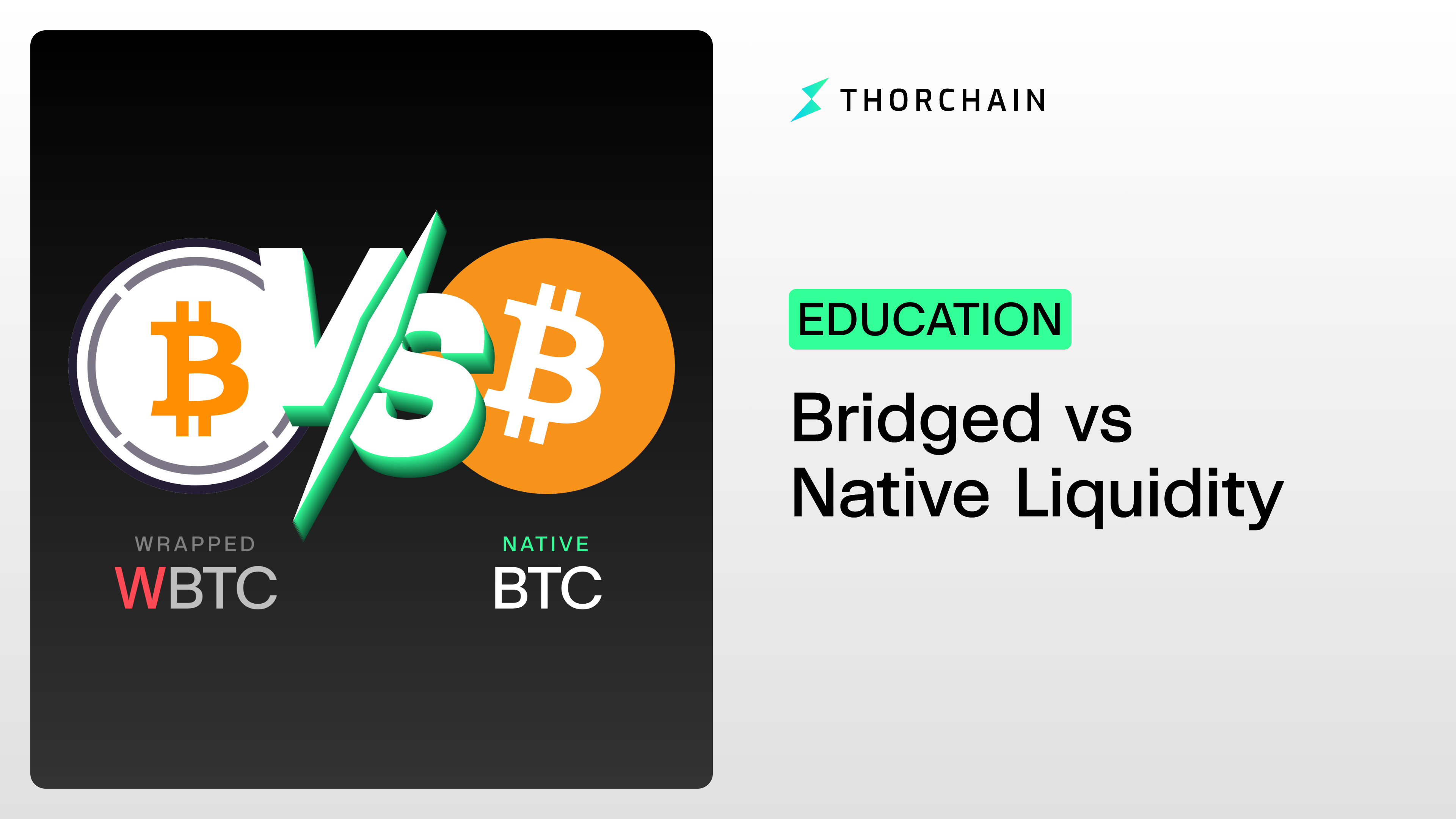
Bitcoin can be traded on Ethereum through wrapped tokens such as WBTC, but there's an important difference between holding WBTC and holding actual BTC. One exists on Ethereum and represents Bitcoin held elsewhere, while the other exists directly on the Bitcoin network. Both provide exposure to Bitcoin's price, but they don't carry the same risks.
This difference comes down to how assets are made available across blockchains. Bridged liquidity allows users to access assets on networks where they aren't natively available, while native liquidity refers to assets held in their original form or officially issued by their issuer on a supported network.
For users moving funds between blockchains, the type of liquidity matters because it affects what they receive, how their transactions are settled, and the infrastructure responsible for securing their assets.
How Does Bridged Liquidity Work?
Blockchains operate independently, so transferring value between them requires infrastructure that can coordinate transactions across different networks. Bridges provide one way to do this, although they don't all operate in the same way.
One common approach is to lock tokens on their original blockchain and issue a wrapped representation on another. For example, a bridge might lock ETH on Ethereum and mint an equivalent amount of wrapped ETH on a different network. These wrapped tokens can then be traded, transferred, or deposited into DeFi applications, while the original ETH remains locked.
The problem is that users now depend on the bridge to maintain the backing of those tokens. If the bridge is exploited or the underlying assets become inaccessible, the wrapped tokens could lose their backing and trade below the value of the original asset. Even if Ethereum continues operating normally, holders may be unable to redeem their tokens for the ETH they're supposed to represent.
This also changes how settlement works. Receiving wrapped ETH on another network doesn't mean the user has received ETH on Ethereum. The transaction may be finalized on the destination blockchain, but recovering the underlying ETH still requires redemption through the bridge.
Other bridges use liquidity pools instead of issuing wrapped tokens. They maintain reserves on multiple blockchains, allowing users to deposit tokens on one network and receive existing tokens from a pool on another. This means users can receive the actual destination asset without having to redeem a wrapped representation afterward.
However, these bridges still depend on having sufficient liquidity available. If large amounts of capital move in one direction, the destination pool can become depleted, forcing the bridge to rebalance its reserves or temporarily restrict transfers.
Bridged assets can also contribute to liquidity fragmentation. When multiple bridges issue different versions of the same token, each representation may trade in separate liquidity pools. Even though they track the same underlying asset, the tokens aren't necessarily interchangeable. This can reduce the trading depth available to individual versions and increase slippage for larger trades.
How Does Native Liquidity Work?
Native liquidity refers to assets available on their original blockchain or officially issued by their issuer on a supported network. BTC on Bitcoin and ETH on Ethereum are examples of native assets, while tokens such as WBTC represent an underlying asset through a separate issuance arrangement.
Some assets are also issued natively across multiple blockchains. Stablecoin issuers, for example, can make their tokens available directly on several networks. This allows users to hold an officially supported version of the asset without depending on a third-party wrapped representation.
However, having native assets available on multiple blockchains doesn't automatically allow users to exchange them. Someone holding BTC on Bitcoin can't simply send it to an Ethereum address and receive ETH in return. The two networks operate independently, so an exchange still needs infrastructure to process transactions on both sides.
THORChain solves this problem by allowing users to swap native assets across different blockchains without relying on wrapped tokens.
For example, someone holding BTC can exchange it for ETH through THORChain without first bridging Bitcoin onto Ethereum. The user sends native BTC, the swap is executed through THORChain's liquidity pools, and the recipient receives native ETH directly in their Ethereum wallet.
The advantage is that settlement happens in the asset the user actually wants to receive. Once the outbound transaction is confirmed on Ethereum, the recipient holds ETH on its original blockchain. There's no wrapped token to redeem, no additional bridge withdrawal, and no need to depend on a separate issuer maintaining the value of a representation.
This also avoids the problem of choosing between different wrapped versions of an asset. Traders don't need to find a bridge that issues a particular representation of BTC or an exchange with sufficient liquidity for that version. THORChain provides access to liquidity for supported native assets, allowing users to exchange them across their respective networks.
The Advantage of Native Cross-Chain Swaps
Wrapped tokens introduce security risks, rely on bridges for redemption, and can fragment liquidity across different versions of the same asset. If a bridge is exploited or loses the assets backing its tokens, holders may be unable to redeem them for the original asset.
THORChain addresses these concerns by allowing users to swap native assets without wrapping or bridging them first. Users can exchange BTC for ETH and receive native ETH directly on Ethereum, without holding a wrapped token or going through a separate redemption process. This removes the ongoing risks associated with holding bridged representations while allowing users to trade between supported blockchains.