The implementation of THORChain’s v3 is a milestone not only for the project but for the entire decentralised finance (DeFi) ecosystem. Building on years of innovation since the Mainnet Chaosnet (MCCN) launch in April 2021, this update ushers in a new era for cross-chain liquidity and decentralised applications. For THORChain users and the community, it felt like Christmas came early! This article will explain what the V3 release and recent related changes mean for THORChain and what new opportunities it unlocks for the future.
Reflecting on the Journey Since MCCN
When Multichain Chaosnet (MCCN) launched, THORChain revolutionised decentralised liquidity by enabling users to seamlessly swap native assets like Bitcoin, Ethereum, and BNB without the need for centralised intermediaries or wrapped tokens. Initially, the focus was on creating a robust, secure, and scalable platform for cross-chain swaps.
Over the past 3+ years, THORChain has grown steadily, becoming a key infrastructure for decentralised swaps integrated into platforms such as Ledger Live, Trust Wallet, and OKX. THORChain also began rolling out its originally planned THORFi features such as synthetics, savers, and lending, with notable success. However, as the only cross-chain DEX, THORChain became too big to risk failure, which constrained its ability to introduce more advanced features like order books and perpetual swaps as change and complexity introduce risk.
While this approach prioritised security and stability, it limited THORChain’s growth and ability to innovate. A new approach was needed to allow innovation without adding risk. Recognising these constraints, recent updates and the v3 release have introduced a framework that balances the need for security with the flexibility to foster innovation and expand its ecosystem.
What Makes v3 a Game-Changer
With the release of v3, THORChain has undergone transformative upgrades that redefine its capabilities and potential.
Upgrade to Cosmos SDK v0.50
This update aligns THORChain with the latest advancements in the Cosmos ecosystem. The addition of smart contract functionality, including support for the CosmWasm module, enables developers to deploy smart contracts directly onto THORChain. This allows innovation to occur within smart contracts and also segregates risk. This transition also opens the path for the Inter-Blockchain Communication (IBC) protocol compatibility, allowing THORChain to monitor IBC enabled chains from Bifrost, making them cheaper to add. Compared to its previous state, where such functionalities were absent, this upgrade significantly expands THORChain’s capabilities by fostering interoperability and enabling complex DeFi applications to be built within its ecosystem.
Switch from Tendermint to CometBFT
As part of the Cosmos SDK v0.50 update, THORChain has transitioned its consensus layer from Tendermint to CometBFT. This upgrade enhances the consensus mechanism with better performance, security, and scalability. CometBFT offers improved block finality times and more robust fault tolerance, ensuring a higher degree of reliability and efficiency in network operations.
Cosmos Ecosystem Compatibility
The inclusion of Cosmos’ default MsgSend functionality ensures that THORChain can integrate more easily with the broader Cosmos ecosystem. This alignment reduces friction for developers and users, streamlining participation and adoption.
Rujira App Layer
The Rujira App Layer is a pivotal feature of THORChain’s v3, resulting from the merger of key DeFi projects — Kujira, Levana, Fuzion, Unstake, and Wink — into the Rujira Alliance. This collaboration unifies fragmented DeFi tools into a seamless experience, enabling developers to build decentralised applications directly on THORChain’s liquidity pools. This provides the following benefits:
Unified DeFi Suite: The Rujira Alliance enables a comprehensive range of DeFi products, including order books, perpetual futures, NFTs, launchpad, money markets and a liquidation platform, all hosted on the THORChain base layer.
Smart Contract Integration: By leveraging CosmWasm support, developers can deploy robust and efficient smart contracts, facilitating a higher degree of functionality, composability and innovation. Smart contracts within the Rujira Alliance will be migrated and deployed onto THORChain, progressively rolling out in Q1 and Q2 2025.
Developer-Friendly Ecosystem: The Rujira App Layer provides an app deployment environment that will become more permissionless over time, ensuring seamless and scalable application development for a variety of use cases. Builders will have access to:
- Comprehensive Design System: access an open-source Figma, stylesheets, and React components for a unified and ready-to-use UI integration.
- Declarative Data: with the graph data layer, your apps can fetch balances, orders, and positions efficiently, type-safely and without duplication.
- Chain Abstraction: call your Contract on any connected THORChain chain, with only 10 lines of code.
THORChain Revenue Addition: The Rujira App Layer will share 50% of generated fees with THORChain, supplementing THORChain’s gross income. In addition, as the Rujira layer will use the base layer pools, it will increase THORChain’s base pool swap volume.
This development not only enhances THORChain’s capabilities but also positions it as a leading DeFi chain, providing users with a comprehensive and efficient decentralised financial ecosystem. More information can be found in TCU’s RUJIRA Article.
Unlocking New Opportunities
The implications of v3 go beyond technical upgrades. Here are some key ways it reshapes THORChain’s future:
Direct Access to Native Assets
One of the most groundbreaking aspects is how THORChain allows smart contracts within the App Layer to access native assets directly. Unlike other platforms, where smart contracts typically operate with only wrapped assets (IOUs issued by a centralised intermediary that holds the underlying asset) and/or tokens bridged by third-party protocols adding an extra layer of risk, THORChain’s design allows inbound and outbounds transactions with native Bitcoin (BTC), Ethereum (ETH), and more. While smart contracts will be dealing with Secured Assets under the hood, a representation of a native asset held within THORChain’s vault, the ability for users to deal only with native assets when interacting with a complex DeFi stack is unprecedented and opens the door to innovations previously unimaginable. See the video for more information.
Understanding the THORChain DeFi Stack
DeFi Expansion
The introduction of smart contracts and the integration of the Rujira App Layer with THORChain’s base layer, enables the protocol to evolve from a cross-chain DEX into a full-fledged DeFi stack. Together, these layers allow seamless interaction with native assets and the deployment of sophisticated decentralised applications. Developers can now leverage the combined infrastructure to implement order books, lending platforms, and other DeFi products, transforming THORChain into a comprehensive and secure ecosystem for decentralised finance.
Interoperability
The capability to handle native assets and call contracts from and to any connected chain positions THORChain as a critical player in the cross-chain DeFi ecosystem.
Greater Adoption
Enhanced compatibility and functionality make it easier for wallets, exchanges, and platforms to integrate THORChain. This will drive user adoption and further decentralise the network.
Economic Evolution: Enhancements Shaping THORChain’s Future
Beyond the technical upgrades introduced with v3, THORChain has been steadily implementing pivotal economic improvements. These changes addressed issues within THORChain and are aimed at rewarding network participants:
Increased System Income
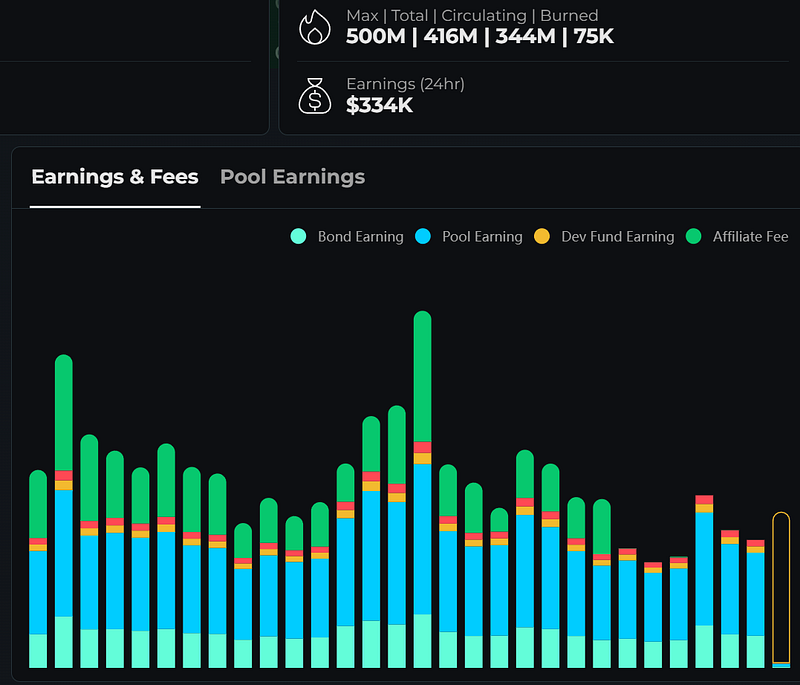
THORChain has optimised income distribution across its ecosystem by implementing a minimum swap fee for all asset types which has seen an increase in network revenue. By increasing network revenue, incentives for network participants are increased promoting a healthier and more active ecosystem that aligns with long-term growth.
Incentive Pendulum Update
The Incentive Pendulum is a mechanism in THORChain that balances rewards between node operators and liquidity providers by adjusting reward distributions between liquidity providers and node operators. Recent updates have made the distributions fairer and added responsiveness to current and future network conditions. These improvements safeguard network security while maximising liquidity efficiency and optimising economic alignment across the ecosystem. See more information on the docs.
Economic Enhancement Through RUNE Burn
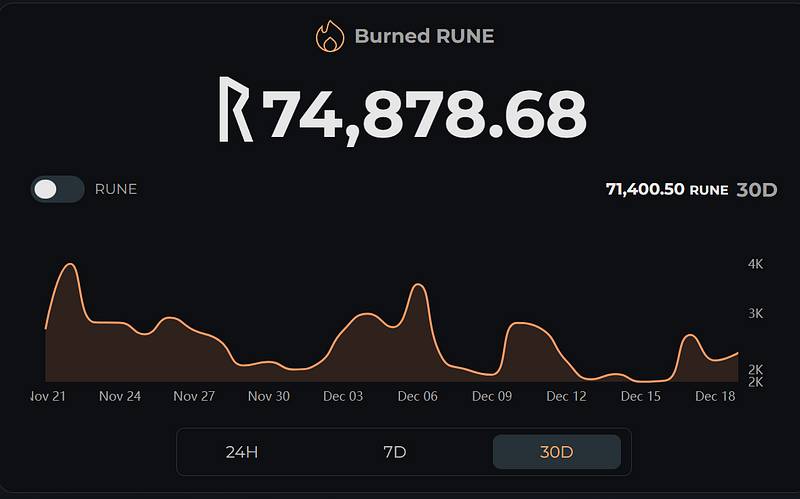
One of the most significant recent initiatives has been the introduction of the RUNE burn mechanism. Five percent of the system income is burnt each block, making RUNE deflationary. The amount burnt is deducted from the total supply of RUNE. This process not only enhances scarcity but also aligns economic incentives for all stakeholders.
THORChain Layers: 3x Increasing Development Output
Historically, THORChain’s development and maintenance were handled by its core developers and the NineRealms team, managing a single-layer system. However, the growing scope and complexity of THORChain required a more specialised approach. THORChain has now moved to a multi-layered architecture, each supported by a dedicated team. This structure ensures scalability, innovation, and efficiency.
Bifrost Layer — StrangeLove
The Bifrost layer is a crucial component of THORChain, enabling seamless cross-chain functionality by observing, signing and broadcasting transactions between THORChain and external blockchains. This ensures efficient and secure asset transfers across networks. The StrangeLove team will focus on:
- Upgrading the Threshold Signature Scheme (TSS) for improved security.
- Integrating Inter-Blockchain Communication (IBC) within the Bifrost Layer.
- Adding external chain observer advanced features like Cosmos “Vote Extensions” to strengthen reliability and efficiency.
- Supporting chain additions within the layer.
THORChain Base Layer — NineRealms
The NineRealms team continues to lead the development of the core THORChain protocol, focusing on its foundational elements:
- Ensuring operational integrity, stability, and security.
- Implementing features such as Yield Streaming for improved liquidity provisioning
- Adding new wallet and UI integrations to increase THORChain’s adoption and volume.
- Sunsetting of THORFi features as equivalent offerings are deployed in the app layer in order to focus the base layer on cross-chain swaps and improve system robustness (by removing built-in leverage from Synths and Lending).
- Adding new chains: Base then Solana in Q1 2025 with XRP, Cardano, TON and Sui being discussed.
App Layer — Rujira Alliance
The Rujira Alliance drives innovation at the application layer. They will build and deploy smart contracts on top of the THORChain base layer. Key focuses include:
- Delivery and implementation of smart contracts directly into THORChain.
- Enabling features like order books, lending platforms, perpetual futures, and other DeFi products within the ecosystem, as discussed above.
- Building a rich community and ecosystem around the Rujira App Layer.
Security Layer: A Conceptual Framework
To support the integrity of all three layers, a robust security framework has been established. This “conceptual security layer” spans across the Bifrost, Base and App layers, ensuring holistic protection, in addition to THORChain’s existing security measures:
- Auditing Teams: Specialised auditing teams have been used to enhance the security of each layer:
- Rujira App Layer: Zellic is the auditing partner for all smart contracts and tools.
- THORChain Base Layer: OtterSec is the auditing partner for MsgSend handlers and Secured Asset swapping logic. This supplements the audit conducted by Code Arena this year.
- Bifrost Layer: Zellic recently audited the Bifrost code and will continue to be audited periodically.
- Active Monitoring: Hypernative has been engaged under a multi-year node bonding agreement funded by the treasury. Their role includes providing real-time event monitoring, automated alerting, and risk mitigation across THORChain’s layers. Deliverables include invariant checks, solvency monitoring, transaction relays, and risk assessment of new attack vectors. Hypernative’s monitoring system also supports app-layer and IBC transactions, ensuring comprehensive security for THORChain.
Summary
THORChain’s journey from MCCN to v3 highlights its evolution from a bold idea to a cornerstone of decentralised finance. By addressing its limitations and embracing new possibilities, the v3 release sets the stage for a future where THORChain isn’t just a DEX but a thriving ecosystem for cross-chain DeFi.
With the release of v3, THORChain has introduced significant upgrades, including advanced interoperability and smart contract capabilities. This isn’t just an upgrade — it’s a redefinition of what THORChain can achieve. As we move into 2025, THORChain is poised to lead the charge in decentralised liquidity and innovation, potentially transforming the DeFi landscape for years to come.
Where to get more information about THORChain?
Twitter Spaces — subscribe on RSS or wherever you get your podcasts
THORChain University — educational content, monthly posts, & discord server
THORChain University Updates — Monthly update articles
GrassRoots Crypto — Update videos
Community
To keep up to date, please monitor community channels, particularly Telegram and Twitter:
Website | Documentation | X | Telegram Community | Telegram Alerts | Community Discord | Developer Discord | Explorer | RuneScan | Reddit | Gitlab | Medium | Linktree | Thorcharts

Related articles
![How to Swap Crypto on THORChain thumbnail, a THORChain guide]()
Sep. 18, 2026
How to Swap Crypto on THORChain
- Guide
![THORChain Podcast protocol update cover]()
Sep. 17, 2026
THORChain Returns to Shipping: Zcash, Monero and Self-Sufficiency
- Podcast
![NanoGPT and THORChain branding together, representing NanoGPT's accountless AI model marketplace settling crypto payments through THORChain.]()
Sep. 16, 2026
Protocol Spotlight - NanoGPT
- Spotlight
![Thumbnail for THORChain's Investor Relations dashboard on DefiLlama, showing fees, revenue, and income statement charts.]()
Sep. 14, 2026
Introducing THORChain’s DefiLlama Investor Relations Dashboard
- Marketing
![Ecosystem Update Podcast with Station Wallet]()
Sep. 13, 2026
Terra’s Station Wallet Is Back as Vultisig’s Agentic THORChain Wallet
- Podcast
![THORChain Thumbnail for the 2026 guide comparing ten decentralized exchanges across cross-chain support, fees and MEV protection.]()
Sep. 10, 2026
The 10 Best Decentralized Exchanges (DEXs) in 2026
- Guide
![Protocol Update Podcast with Chad Barraford, Kenton and Patriot / Denny]()
Sep. 10, 2026
THORChain Prioritizes Stability Before Monero and New Features
- Podcast
![Thumbnail for THORChain guide explaining how the Advanced Swap Queue and slip-based fees prevent sandwich attacks on swaps.]()
Sep. 7, 2026
How THORChain’s Swap Queue Prevents Sandwich Attacks
- Guide
![Ecosystem Update Podcast with RAVN]()
Sep. 5, 2026
Inside RAVN’s Native $BTC Aggregator and Its THORChain Integration
- Podcast
![State of the Network August 2026 report thumbnail covering THORChain swap volume, fees, active wallets, bonds, Protocol Owned Liquidity, and the affiliate leaderboard.]()
Sep. 4, 2026
State of the Network - August 2026
- Report
![Protocol Update Podcast with Hans, Devel, Chad, Kenton & Denny]()
Sep. 3, 2026
THORChain Churns Again: POL Goes Live, Rujira Resumes and BLO Debate
- Podcast
![THORChain guide thumbnail explaining how to bond RUNE through direct whitelisting, RUNEBond and bRUNE liquid staking, with yield and risk comparisons for each method.]()
Sep. 2, 2026
How to Bond your Rune: a practical guide
- Guide
![THORChain Protocol Spotlight thumbnail for BazaarSwap covering cross-chain aggregation across 360 exchanges, native asset routing and THORChain's role as a core liquidity provider.]()
Aug. 31, 2026
Protocol Spotlight - BazaarSwap
- Spotlight
![Ecosystem Update Podcast with Rujira]()
Aug. 29, 2026
THORChain’s App Layer Rujira Is Paused. Rujira Wants a Clear Restart Path.
- Podcast
![Protocol Update Podcast with Chad Barraford, Kenton and Denny]()
Aug. 27, 2026
THORChain Puts Stability First: Monero & Zcash Delayed, ADR30, AI Agents and Memoless Swaps
- Podcast