Vultisig’s Agentic Future: Secure AI Wallets, Rujira, and THORChain

2026-07-11 — 9 min read
- Podcast
THORChain x Vultisig Podcast #216 ft. TheDivingPaaao & Patriotsounds | July 11, 2026 | Watch the full episode on YouTube
By Raynalytics
TL;DR
- Vultisig now supports more than 37 chains with seedless MPC vaults. Its architecture grew directly from THORChain's TSS and MPC model, giving users multiple signing shares instead of one private key or seed phrase.
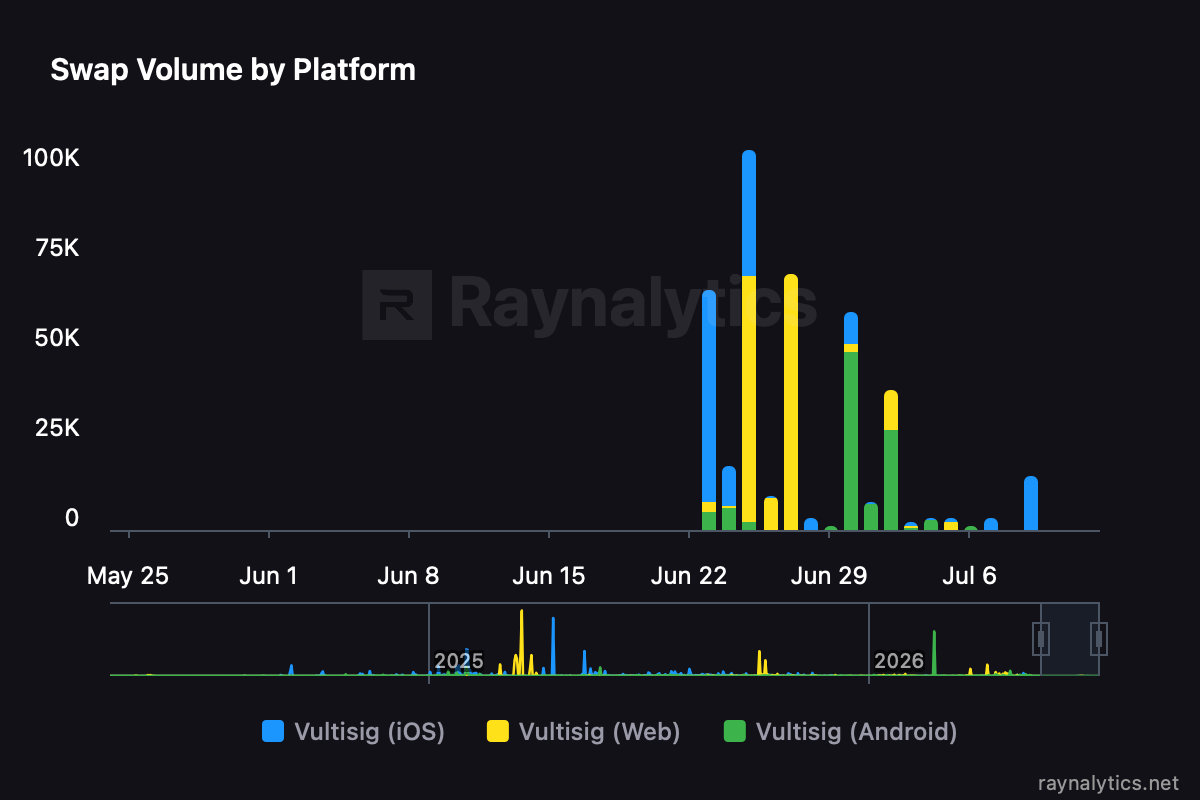
- Vultisig remains strongly THORChain-first. It compares available swap providers for the best output, but paaao said the large majority of its swap volume still routes through THORChain, followed by Maya Protocol and other providers.
- Vultisig acquired and relaunched Station Wallet as a separate agentic wallet. The next major focus is deep Rujira support, including concentrated liquidity positions that an agent could help manage.
- Station's agent cannot sign or broadcast transactions by itself. Guardrails inspect what it proposes, then the user reviews and authorizes the final transaction through Vultisig's MPC wallet technology.
- Native $XMR support is being explored, but it requires new DKLS-compatible cryptography and careful navigation of app-store and regulatory constraints. There is no launch date yet.
Vultisig began inside the THORChain ecosystem with a simple premise: self-custody should not depend on one secret that can be lost, copied, or handed to malicious software. That premise looks even more important as AI agents begin interacting with money.
In Podcast #216, Vultisig project manager paaao joined Denny to explain how the wallet is expanding without abandoning that security model. The discussion covered routing, Rujira, Station Wallet, agent guardrails, self-hosted infrastructure, automation, and the difficult path toward Monero support. Denny closed by saying Ray would have his work cut out on this recap. He was right.
1. A Seedless Wallet Born From THORChain
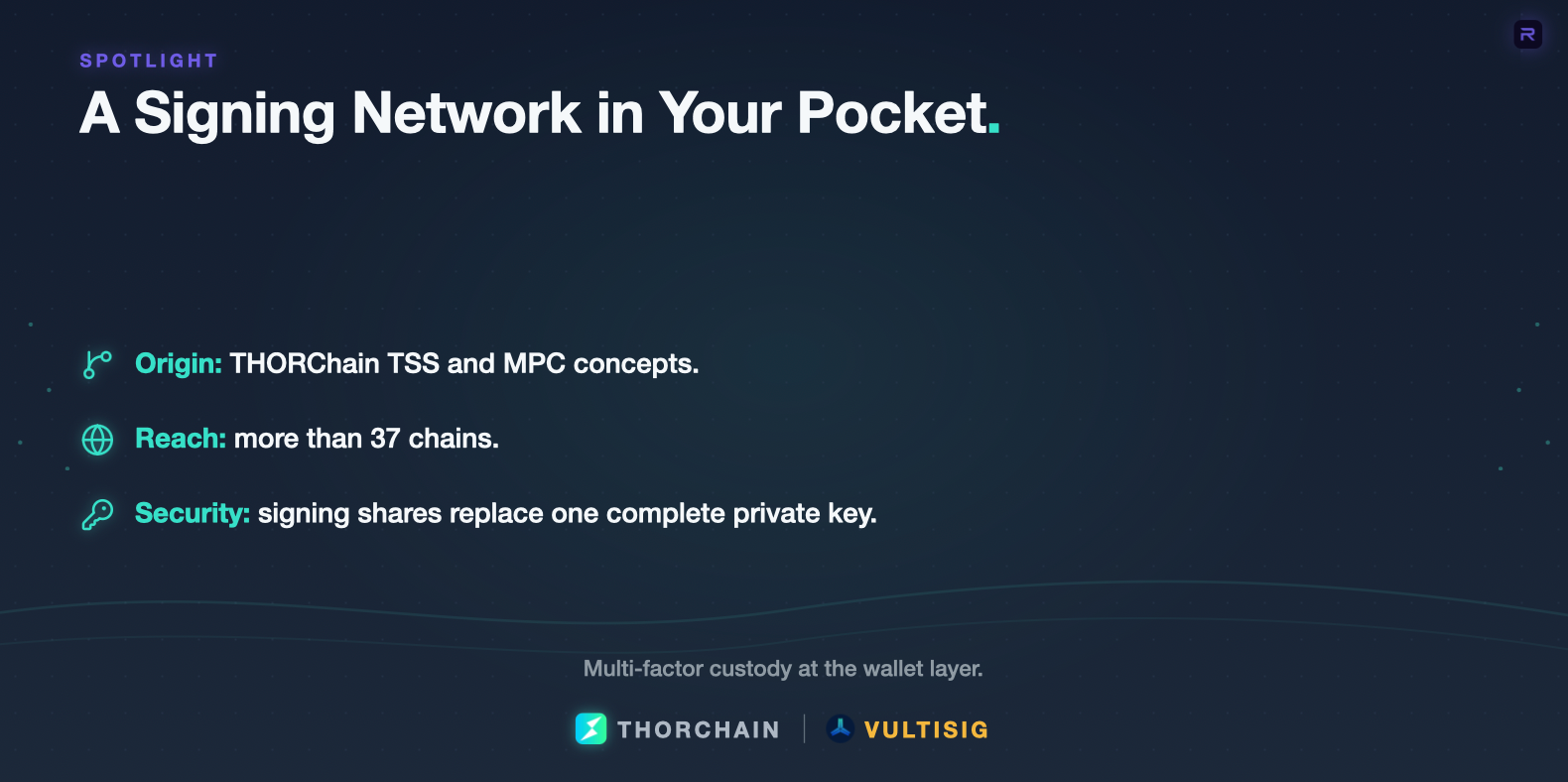
Vultisig is an open-source, seedless multi-chain wallet supporting more than 37 chains. Instead of asking a user to protect one private key or seed phrase, it uses multi-party computation (MPC) to distribute signing shares across devices.
The architecture came directly from THORChain. JP founded Vultisig by taking the TSS and MPC concepts used by THORChain's nodes and applying them to a consumer wallet. A Vultisig user effectively runs a small signing network: no participant reconstructs or writes down the complete private key, and more than one share can be required to approve a transaction.
That creates multi-factor authentication at the custody layer. A conventional wallet may rely on one password, PIN, or seed phrase. Vultisig can require separate devices while still supporting assets across many chains, avoiding the chain-by-chain fragmentation of traditional multisig setups.
"Everyone using Vultisig is essentially technically running their own THORChain ecosystem, but just for signing." (paaao)
2. Routing With a THORChain Bias
Vultisig aims to remain chain-agnostic while giving THORChain routes preference where they are competitive. For every requested swap, integrated providers return quotes and the wallet selects the route with the best expected output. Advanced users may eventually be able to choose a preferred route themselves.
The provider mix covers gaps THORChain does not yet serve. Jupiter was integrated for native Solana swaps shortly before the recording, replacing an earlier LI.FI route for that use case. SwapKit provides additional redundancy, while Maya Protocol supplies another native cross-chain path.
That redundancy became visible during THORChain's recent pause. Vultisig added alternative routes, but its core users still swapped less. Volume returned when THORChain resumed, reinforcing how closely the wallet's user base remains tied to the protocol. The earlier restart recap covers that recovery in detail.
"As soon as THORChain came back up, the volume also returned." (paaao)
The wallet also supports native THORChain functions beyond swaps, including $TCY staking, Rujira staking, and bond management. paaao said proper $bRUNE support was expected to enter development after the team cleared its immediate backlog.
3. Station Wallet Meets Rujira
The largest strategic change is Station Wallet. Vultisig acquired the wallet and relaunched it as a separate agentic product, built for a future in which users describe an outcome and software handles the interface complexity.
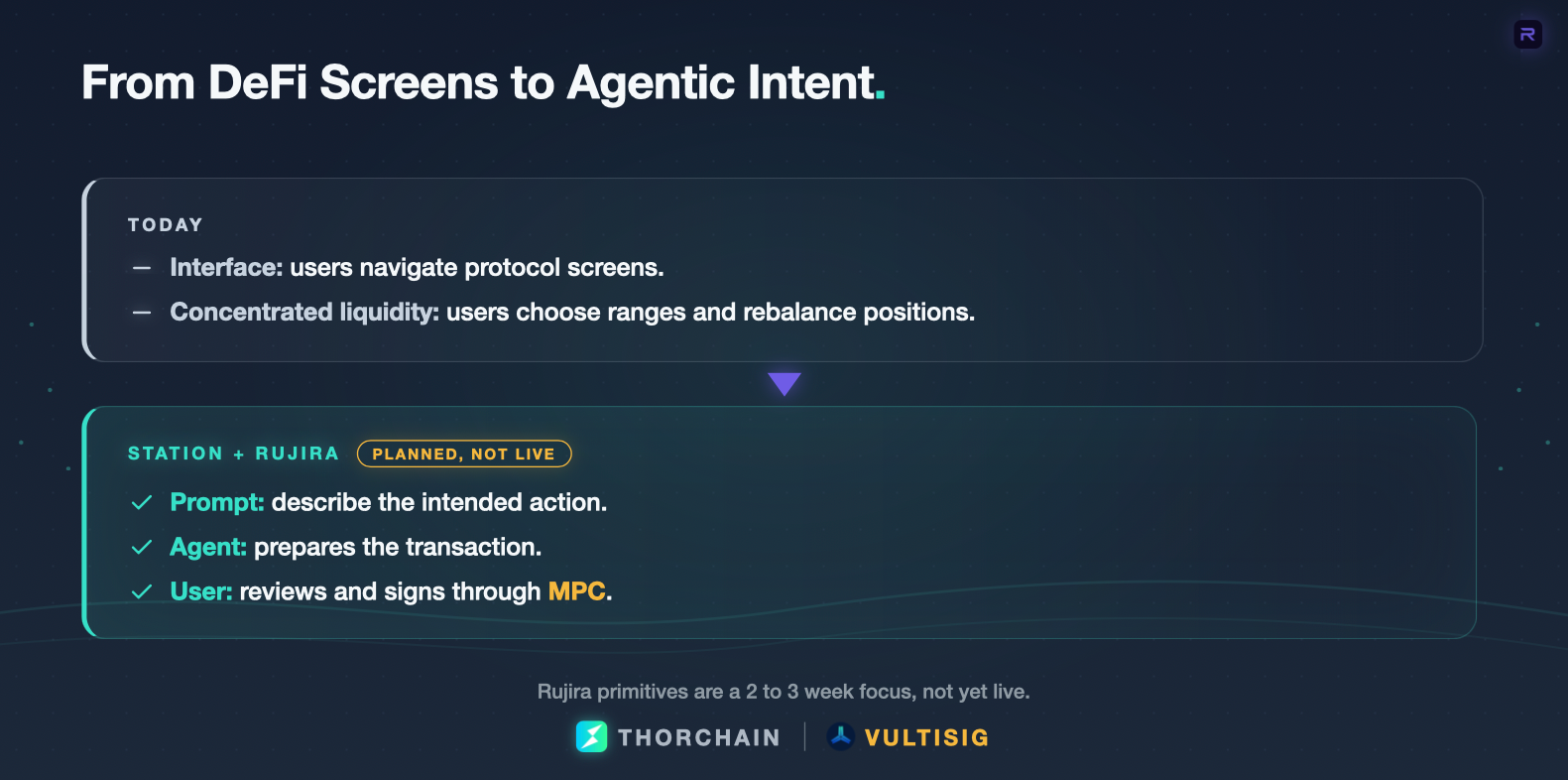
Instead of learning a different screen for every chain and protocol, a user could ask Station to send an asset, stake $ETH, bond $RUNE, or prepare another on-chain action. Vultisig is also building an SDK that lets external agents create and use vaults, while its own AI backend supplies protocol-specific transaction knowledge.
Rujira is the clearest near-term use case. Concentrated liquidity requires users to choose ranges, monitor positions, and rebalance as markets move. paaao said Vultisig planned to focus over the following two to three weeks on teaching Station to work with Rujira's concentrated liquidity layer, followed by the broader app suite.
Rujira also embeds a Vultisig Fast Vault flow, letting a user create a vault with an email and interact without first connecting a separate wallet. Together, THORChain supplies native cross-chain liquidity, Rujira supplies the DeFi primitives, and Vultisig supplies the self-custody and signing layer.
"We're really seeing the future where apps and UIs are collapsing into just an agentic layer." (paaao)
4. The Agent Advises, the User Signs
Giving an AI agent direct control over a seed phrase would create an obvious failure mode. One hallucinated character in an address or one malicious instruction could turn into an irreversible on-chain loss. Station is designed so the agent never receives the signing material.
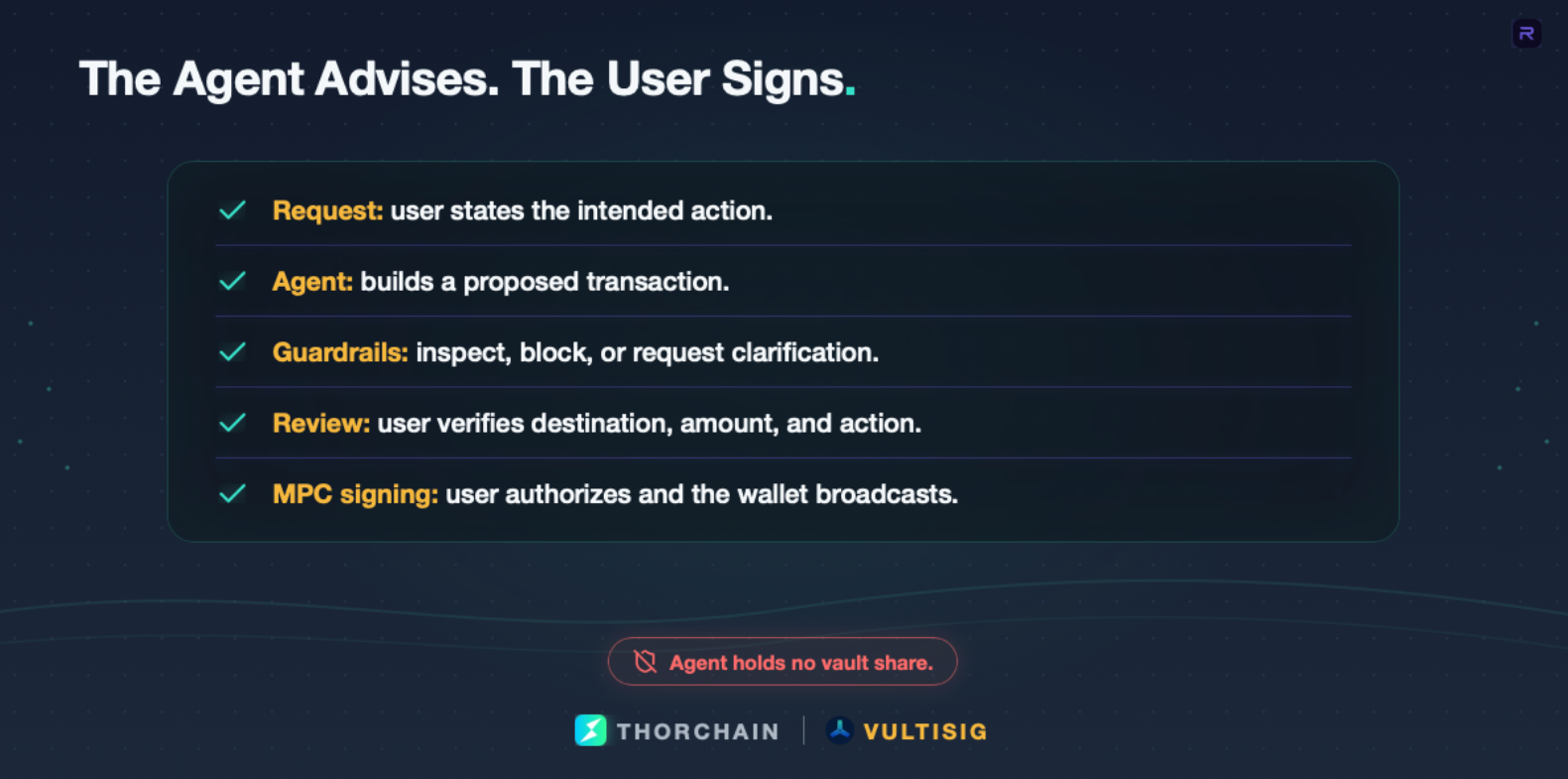
The agent interprets the request and builds a proposed transaction. A separate harness and multiple guardrails inspect its output, block suspicious actions, or ask the user for clarification. Even after those checks pass, the agent remains an adviser. It presents the destination, amount, and action in a review card, and the user must authorize it with a password or biometrics.
Only then does Vultisig's MPC layer sign and broadcast the transaction. The agent holds no vault share and cannot independently move funds. This separation is also why Vultisig kept Station outside the core wallet instead of mixing experimental AI code with secure vault code.
"The station agent itself is actually just an adviser." (paaao)
The hard part is expanding capability without weakening those boundaries. Station must understand different transaction formats and protocol rules across 37 chains, while keeping inference costs reasonable. paaao said guardrails were built first, sometimes causing valid requests to fail safely. The team is now improving what the agent can do inside those limits.
5. Different Vaults for Different Risks
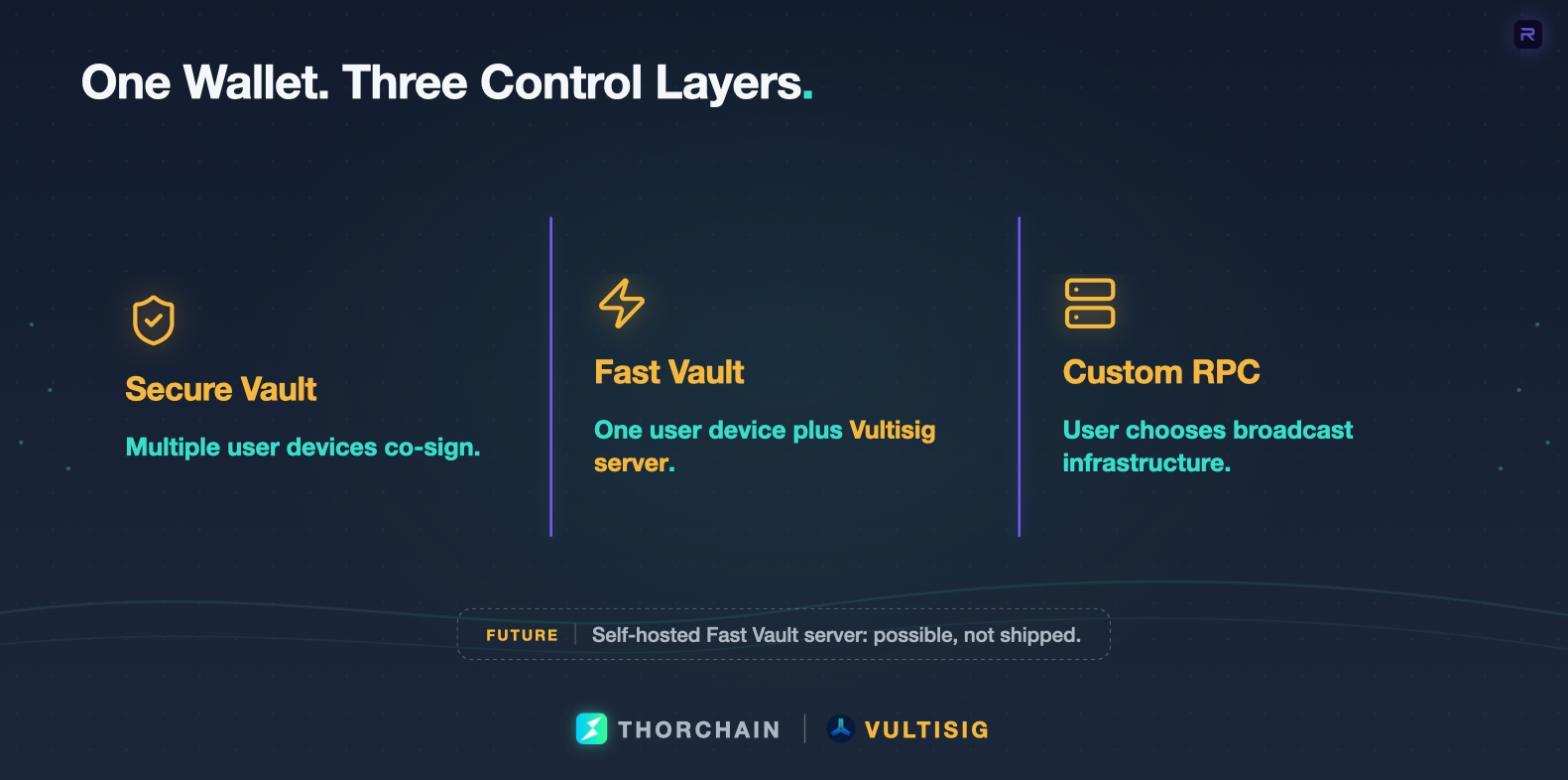
Vultisig's product range separates long-term custody from everyday use. A Secure Vault distributes shares across the user's devices and requires multiple signers. A Fast Vault pairs one user device with a Vultisig-operated server, reducing friction for smaller balances and routine spending.
Self-hosting that second server is a possible future option, not a shipped feature. It could let a business or advanced user keep the convenience of a Fast Vault while removing reliance on Vultisig's server. Custom RPC endpoints are already live, giving users control over which infrastructure broadcasts their transactions.
Shared vaults extend the same model to families, teams, payroll, or trust-like arrangements. Signers can be replaced through resharing rather than forcing everyone to migrate funds after one device or participant changes. Recent device notifications also remove the need to send QR codes between signers for every key generation or transaction.
"I always see Vulti as a wallet built with the community." (paaao)
The broader goal is modularity. Users should be able to opt into convenience, automation, and future spending tools without forcing those dependencies into the most security-sensitive vault setup.
6. Marketplace Automation Versus General Agents
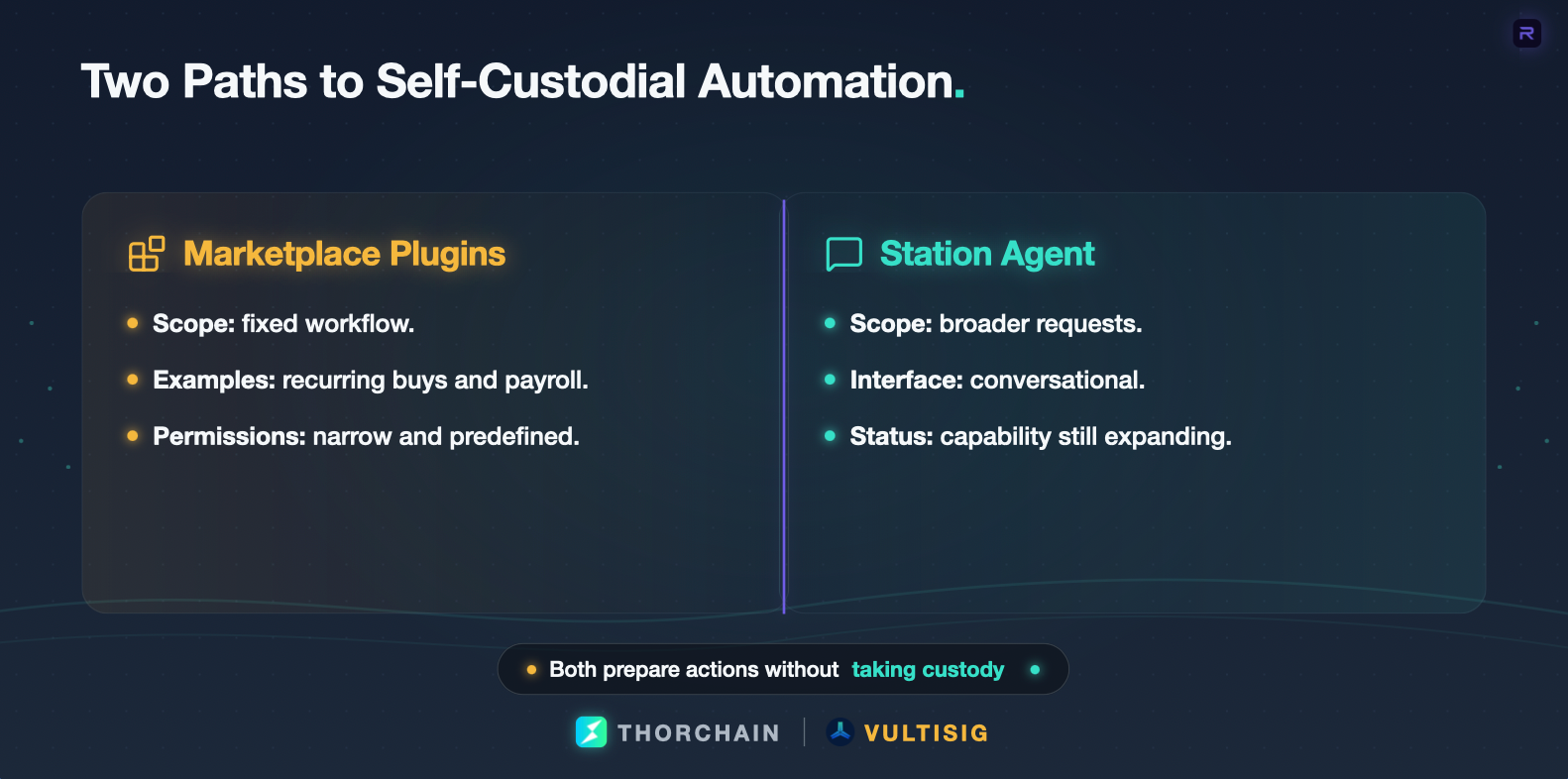
Vultisig's Marketplace already supports constrained automation. Its recurring-buy and payroll plugins can propose cross-chain actions under predefined rules while the assets remain self-custodial. Developers can build plugins and receive 70% of the Vultisig affiliate fee generated through their automation.
The team has paused major Marketplace expansion while it focuses on Station. A fixed plugin can perform one workflow predictably, which is useful when users want narrow permissions. A capable agent could eventually handle a wider range of tasks, from dollar-cost averaging to managing liquidity positions, without a separate plugin for every strategy.
That does not make the Marketplace obsolete. Plugins remain the more restrictive option, while Station is intended to become the flexible, conversational layer. Keeping the products modular gives users a choice between deterministic automation and broader agent assistance.
The core Vultisig wallet continues shipping around that work. The team said it releases updates almost weekly, recently added native Solana staking, and is concentrating on improving the chains it already supports instead of adding every available network. Full-time hiring was paused, but outside contributors can still open issues and pull requests.
7. Why Native Monero Support Takes Longer
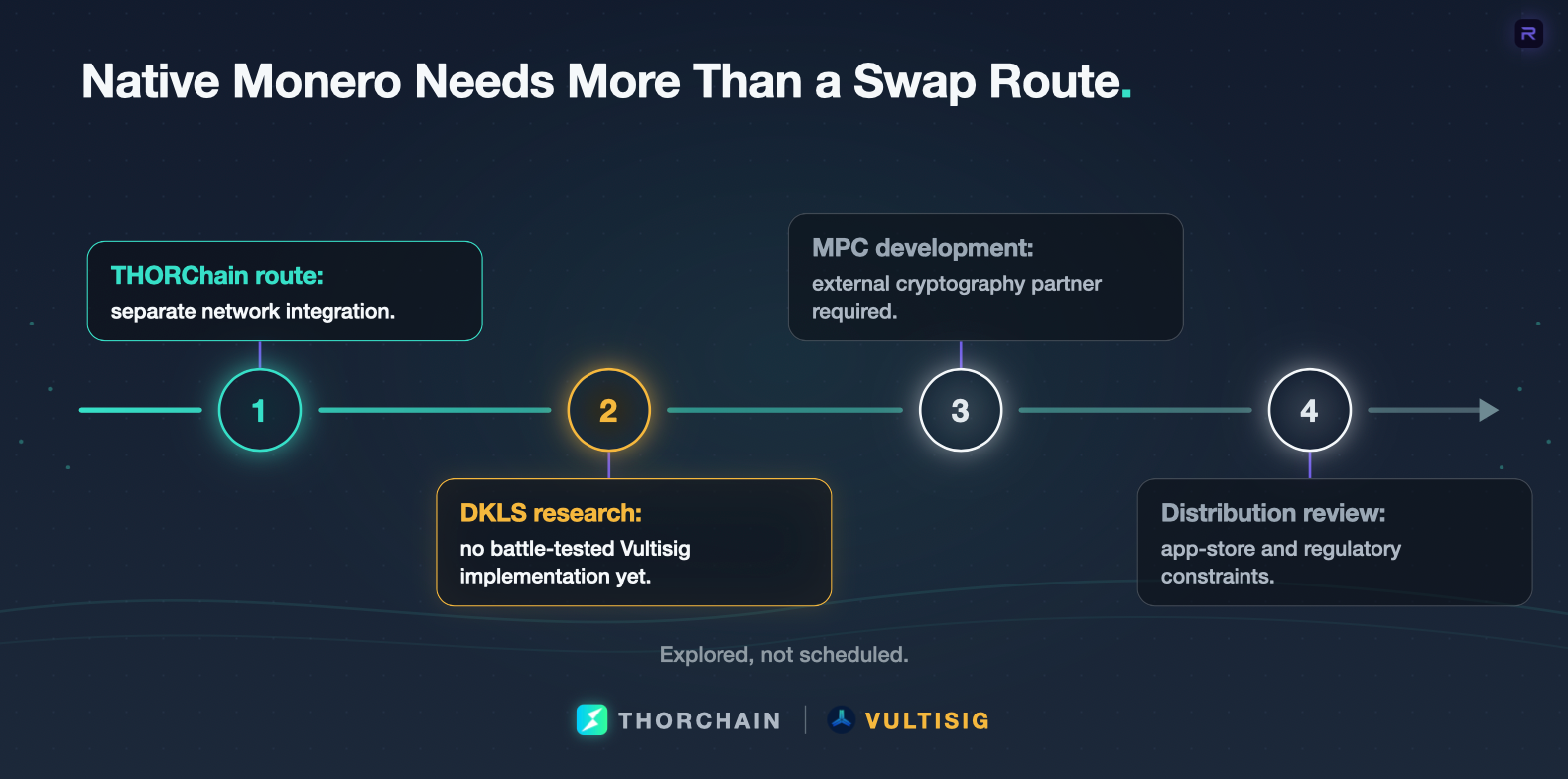
Vultisig wants native $XMR support, but paaao separated that ambition from a launch promise. The first constraint is technical. Vultisig uses DKLS-based MPC, and the team does not have a battle-tested DKLS implementation for Monero's cryptography. Its external MPC partner would need to develop and validate that capability before the wallet could safely ship it.
The second constraint is distribution. Vultisig wants to preserve self-custody and privacy while remaining available through major app stores and compliant across jurisdictions. paaao said he would personally rather lose app-store distribution than abandon those principles, but the team does not want to rush into a release that unnecessarily cuts users off.
No timeline was given. The work is being explored, and its pace depends on cryptographic development, cost, team priorities, and regulation. THORChain's own Monero integration may arrive first, but supporting a THORChain swap route does not automatically give the wallet native $XMR custody.
"I would love to have it tomorrow, but it probably needs a bit more time." (paaao)
What to Watch
- Rujira integration: whether Station begins preparing concentrated liquidity deposits and management actions after the stated two-to-three-week development focus.
- Agent reliability: capability improvements that reduce safe failures without weakening transaction review, guardrails, or user authorization.
- $bRUNE support: the planned addition to Vultisig's native THORChain feature set after the immediate backlog clears.
- Self-hosted Fast Vault infrastructure: whether the idea becomes a supported option for businesses and advanced users.
- Native $XMR custody: progress on DKLS-compatible cryptography and the regulatory path, with no launch date assumed.
- Communication cadence: the promised roadmap, Q2 recap, and clearer release notes for the wallet's near-weekly updates.

More THORChain data, check out raynalytics.net
Follow Raynalytics for more Weekly Analytics and Podcast recaps.

Related articles
![Protocol Update Podcast with Chad Barraford, Kenton and Patriot]()
Oct. 8, 2026
Chad's Unchained Podcast Debrief, Rev-Share and Monero
- Podcast
![Ecosystem Update Podcast with Houdini Swap]()
Oct. 3, 2026
Houdini Swap on THORChain Explained: What It Means for Users and Treasury Revenue
- Podcast
![Protocol Update Podcast with Chad Barraford, Kenton and Denny]()
Oct. 1, 2026
Can or Should THORChain Censor Transactions?
- Podcast
![Protocol Update Podcast with Chad Barraford, Kenton, Devel and Boone]()
Sep. 24, 2026
Inside the Houdini Swap Debate: THORChain’s Treasury, Privacy and Revenue
- Podcast
![Ecosystem Update Podcast with Radix]()
Sep. 19, 2026
Radix and THORChain: Building Trust for the Agentic Future
- Podcast
![THORChain Podcast protocol update cover]()
Sep. 17, 2026
THORChain Returns to Shipping: Zcash, Monero and Self-Sufficiency
- Podcast
![Ecosystem Update Podcast with Station Wallet]()
Sep. 13, 2026
Terra’s Station Wallet Is Back as Vultisig’s Agentic THORChain Wallet
- Podcast
![Protocol Update Podcast with Chad Barraford, Kenton and Patriot / Denny]()
Sep. 10, 2026
THORChain Prioritizes Stability Before Monero and New Features
- Podcast
![Ecosystem Update Podcast with RAVN]()
Sep. 5, 2026
Inside RAVN’s Native $BTC Aggregator and Its THORChain Integration
- Podcast
![Protocol Update Podcast with Hans, Devel, Chad, Kenton & Denny]()
Sep. 3, 2026
THORChain Churns Again: POL Goes Live, Rujira Resumes and BLO Debate
- Podcast
![Ecosystem Update Podcast with Rujira]()
Aug. 29, 2026
THORChain’s App Layer Rujira Is Paused. Rujira Wants a Clear Restart Path.
- Podcast
![Protocol Update Podcast with Chad Barraford, Kenton and Denny]()
Aug. 27, 2026
THORChain Puts Stability First: Monero & Zcash Delayed, ADR30, AI Agents and Memoless Swaps
- Podcast
![Ecosystem Update Podcast with Unstoppable Wallet]()
Aug. 22, 2026
Unstoppable Wallet Adds $RUNE, $TCY and $RUJI, With a Stablecoin Wallet Next
- Podcast
![Protocol Update Podcast with Chad Barraford, Kenton and Denny]()
Aug. 20, 2026
v3.20 Voting Is Underway. Should THORChain’s TSS Library Remain Open Source?
- Podcast
![Ecosystem Update Podcast with Dash]()
Aug. 15, 2026
Inside Dash’s Zcash Orchard Upgrade and Its THORChain Potential
- Podcast