THORChain is a decentralized exchange protocol designed to power the next generation of digital asset exchanges, wallets and payment services. It is not intended to compete with any existing token, platform, or other solution. Rather, THORChain aims to bind all cryptocurrencies together with an accessible, secure, and lightning-fast bridging protocol.
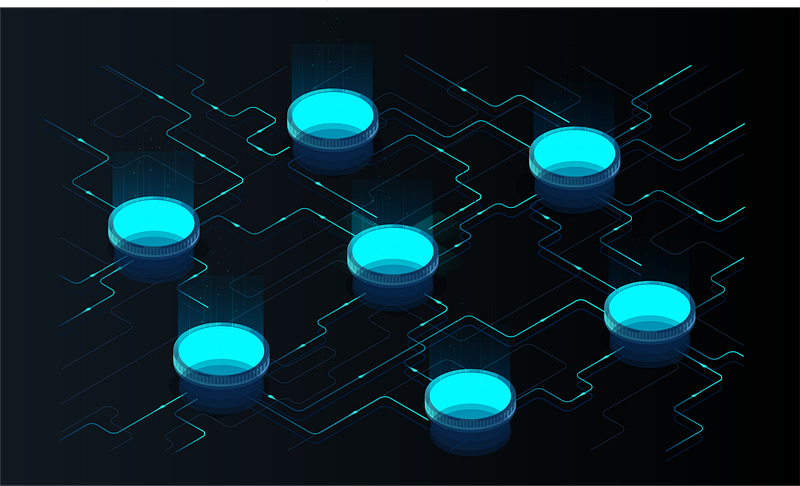
One of the cornerstone concepts driving the project is that of continuous liquidity pools (CLPs). First championed by Bancor, this blockchain-based economic paradigm shift presents a unique solution to liquidity shortages and requirements in exchanges. By creating an on-chain and trustless “basket” of liquidity and incentivizing participation in filling it, THORChain creates a unique exchange environment that never requires a pairing of buyer and seller to transact.
As a result, THORChain will continually encourage and reward anyone who has liquidity to place it on-market and receive a return. This will foreseeably spiral to the point that all liquidity will be contributing to the market and will radically reduce volatility and manipulation, making the market accessible to everyone.
This quick start guide will give a background into liquidity in exchanges and the original Bancor solution before diving into THORChain, the Rune, and the adaptation of CLPs to the protocol.
Exchanges and Liquidity
The first important concept to define is the difference between centralized and decentralized exchange setups. There are some, such as Coinbase and Binance, that serve as a singular point of transference, much like a brokerage. These are the centralized approaches, where a single entity controls all transactions in their marketplace, with fees set and rules made at their discretion. Decentralized exchanges, on the other hand, are facilitated similarly to the currencies themselves: via peer-to-peer networks and consensus-based transactions.
Currently, centralized exchanges are solidly ahead of their distributed counterparts. The cycle of growth and separation from decentralized use numbers is self-propagating: they have much greater liquidity, which leads to higher transaction (and fee) volume, which leads to improved UI, which leads to greater customer base, and so on. The problem is that the singular collection of user and transaction data creates an identifiable target for would-be thieves.
Decentralized exchanges, on the other hand, have no central point of attack. Much like the blockchain concept, these marketplaces are run on individual nodes by consensus. User data and their transactions are far more secure, and a greater degree of anonymity is possible. Until decentralized exchanges can compete on liquidity, though, they’ll never gain traction and be able to compete on enhanced security and privacy.
In the setting of an exchange marketplace, liquidity refers to the strength of the immediately-available asset pool for trades, in that purchase or sale will not affect the price of the given asset. High liquidity, which can also be thought of as ability to consistently handle trades, is good; low liquidity, and therefore inability to transact at high volume, is bad. In low-liquidity situations like those often found on many decentralized exchanges, trades may be impossible between low liquid pairs.
CLPs: Bancor and Basics
While decentralized exchanges are often more in-line with the security-minded principles of cryptocurrencies and require far less trust to operate, they are often plagued by untenable levels of illiquidity, which decreases their ability to match the trade volumes of their centralized counterparts. Until this problem is solved, it is unlikely that decentralized exchanges will ever catch up to the size and growth rate of the alternative. The solution to this, the biggest issue of DEXs, is the implementation of continuous liquidity pools.
Imagine two traders: one wish to sell apples, and the other oranges. In the current setup for DEXs, they’d have to both have sufficient individual liquidity to trade. What a CLP-based protocol offers, though, is an algorithmically-sound trade basket, where a pool of apples are bonded to a pool of oranges. The apple farmer can place any number of apples into the basket, and receive a fair number of oranges at a ratio determined trustlessly and based on preset rules.
In an exchange protocol, CLPs discard the need for a matched buyer-seller pair. Instead, those of either side of the transaction can do so at will, pulling from the CLP. The implication of this on-chain and totally permissionless liquidity is a previously-untapped price feed source.
On-chain Price Feed
This price feed runs primarily on the depth of the relevant pool and the unrestricted availability of arbitrage opportunities amongst market participants. If the ratio is balanced in such a way that arbitrage profit becomes possible, it may be assumed that self-interested traders will take action until the ratio is balanced to fair market price.
The market-force-stabilized price feed, in turn, opens a CLP protocol to functionality unheard of on a decentralized exchange. This on-chain and entirely trustless price feed allows for second-layer instant transactions at a fair price, and even the possibility of token baskets, token indexes, and stablecoins locked to the pool rates.
A consequence of significant magnitude, though, is the further-increased capabilities of a layer 2 network. Second layers, such as the emerging Ethereum Raiden Network or the Bitcoin Lightning Network, allow for a second layer protocol to transact assets, but without contributing to the transactional load of the underlying blockchain. The layer 1 blockchain secures and defines the value of the assets, whilst the performance and scalability of the layer 2 protocol allow new interfaces to be built making the protocol useable.
The combination of continuous liquidity with a trustless on-chain price feed means that THORChain can facilitate instant trades across assets supported by the pool. In addition, it is the first DEX to integrate features like market orders, leverage trading, peer-to-peer credit lending, limit orders, and others previously found only in centralized ecosystems.
Incentivized Participation and Looking Forward
Of course, the next greatest problem facing a CLP-based DEX protocol is the funding and sustainment of this continuous liquidity pool. After the initial token sale with distribution designed to provide initial liquidity, THORChain solves this in a manner truly reflective of its commitment to decentralized blockchain values: returning fees to users.
In a centralized exchange, fees are set unilaterally and returned to the hosting entity. Participants in the THORChain economy, though, are the beneficiaries of transaction fees. Any user can contribute liquidity to a CLP, and fee payouts are tiered accordingly to intensity of need: a pool with “less depth” will pay out at greater rates than one with plenty of operational assets in storage. These fees are all mathematically defined.
Early analysis of the return of staking in CLPs show that even staking in an exchange the size, volume and usage of IDEX can return a staker over 7.5% a month — paid in the same asset they stake in.
Additionally, anyone can gain by monitoring pools and performing continuous market arbitrage. Arbitrage agents perform a vital contribution to the network by ensuring that pool ratios are always reflective of wider market pricing. A similar analysis of a market the size of Bancor, shows that an arbitrage agent would be earning 10% a day on their assets.
Conclusion
CLPs, as integrated into the THORChain protocol, are a breakthrough in liquidity and allow decentralized exchanges to offer liquidity solutions similar to their centralized competitors and thereby compete on enhanced security and trustlessness. By solving this halting shortcoming, THORChain brings the benefits of a decentralized exchange to a new and far larger audience.
More importantly, THORChain incentivises a previously untapped pool of users, traders and liquidity to enter the market; and thereby deeply increasing liquidity and usability of the entire market.
Join the Distribution
For more information or to participate in the distribution, head on over to https://thorchain.org/token.
Be sure to check out our official community channels for updates:
- Github: https://github.com/thorchain
- Medium: https://medium.com/thorchain
- Twitter: https://twitter.com/thorchain_org
- Reddit: https://reddit.com/r/thorchain
- Telegram Community: https://t.me/thorchain_org
- Telegram Announcements: https://t.me/thorchain
Resources:
- THORChain Whitepaper
- ASGARDEX Whitepaper

Related articles
![How to Swap Crypto on THORChain thumbnail, a THORChain guide]()
Sep. 18, 2026
How to Swap Crypto on THORChain
- Guide
![THORChain Podcast protocol update cover]()
Sep. 17, 2026
THORChain Returns to Shipping: Zcash, Monero and Self-Sufficiency
- Podcast
![NanoGPT and THORChain branding together, representing NanoGPT's accountless AI model marketplace settling crypto payments through THORChain.]()
Sep. 16, 2026
Protocol Spotlight - NanoGPT
- Spotlight
![Thumbnail for THORChain's Investor Relations dashboard on DefiLlama, showing fees, revenue, and income statement charts.]()
Sep. 14, 2026
Introducing THORChain’s DefiLlama Investor Relations Dashboard
- Marketing
![Ecosystem Update Podcast with Station Wallet]()
Sep. 13, 2026
Terra’s Station Wallet Is Back as Vultisig’s Agentic THORChain Wallet
- Podcast
![THORChain Thumbnail for the 2026 guide comparing ten decentralized exchanges across cross-chain support, fees and MEV protection.]()
Sep. 10, 2026
The 10 Best Decentralized Exchanges (DEXs) in 2026
- Guide
![Protocol Update Podcast with Chad Barraford, Kenton and Patriot / Denny]()
Sep. 10, 2026
THORChain Prioritizes Stability Before Monero and New Features
- Podcast
![Thumbnail for THORChain guide explaining how the Advanced Swap Queue and slip-based fees prevent sandwich attacks on swaps.]()
Sep. 7, 2026
How THORChain’s Swap Queue Prevents Sandwich Attacks
- Guide
![Ecosystem Update Podcast with RAVN]()
Sep. 5, 2026
Inside RAVN’s Native $BTC Aggregator and Its THORChain Integration
- Podcast
![State of the Network August 2026 report thumbnail covering THORChain swap volume, fees, active wallets, bonds, Protocol Owned Liquidity, and the affiliate leaderboard.]()
Sep. 4, 2026
State of the Network - August 2026
- Report
![Protocol Update Podcast with Hans, Devel, Chad, Kenton & Denny]()
Sep. 3, 2026
THORChain Churns Again: POL Goes Live, Rujira Resumes and BLO Debate
- Podcast
![THORChain guide thumbnail explaining how to bond RUNE through direct whitelisting, RUNEBond and bRUNE liquid staking, with yield and risk comparisons for each method.]()
Sep. 2, 2026
How to Bond your Rune: a practical guide
- Guide
![THORChain Protocol Spotlight thumbnail for BazaarSwap covering cross-chain aggregation across 360 exchanges, native asset routing and THORChain's role as a core liquidity provider.]()
Aug. 31, 2026
Protocol Spotlight - BazaarSwap
- Spotlight
![Ecosystem Update Podcast with Rujira]()
Aug. 29, 2026
THORChain’s App Layer Rujira Is Paused. Rujira Wants a Clear Restart Path.
- Podcast
![Protocol Update Podcast with Chad Barraford, Kenton and Denny]()
Aug. 27, 2026
THORChain Puts Stability First: Monero & Zcash Delayed, ADR30, AI Agents and Memoless Swaps
- Podcast