ZEC has been around since 2016, but its presence across DeFi has remained limited. Users have had relatively few ways to access permissionless liquidity or swap ZEC into assets on other chains without relying on centralized exchanges, bridges, or other third parties.
That’s about to change.
THORChain has completed its ZEC integration, bringing native Zcash into its cross-chain infrastructure. This allows users to swap ZEC directly with native assets on other supported chains without first wrapping or bridging it.
And with ZEC, THORChain marks its first move into supporting permissionless cross-chain swaps for privacy-focused assets.
What Is Zcash?
Zcash launched on October 28, 2016, as a privacy-focused cryptocurrency built from Bitcoin’s codebase. Like Bitcoin, it uses a UTXO-based architecture and has a maximum supply of 21 million coins. The key difference is that Zcash gives users the choice between transparent and shielded transactions.
Transparent transactions work much like Bitcoin transactions. Addresses, amounts, and transaction history can all be viewed publicly onchain.
Shielded transactions use zero-knowledge proofs to verify that a transaction is valid without publicly revealing the underlying transaction information.
Getting to this level of sophistication wasn’t a one-time achievement. Zcash’s privacy technology has gone through several generations as the protocol has continued to improve its approach to privacy, security, and verifiability. Its shielded technology has evolved from Sapling to Orchard, with each generation refining how private transactions are created and verified.
In July 2026, Zcash activated its NU6.3 network upgrade, which introduced Ironwood. The upgrade added a new shielded pool designed to strengthen the integrity and verifiability of Zcash’s shielded supply. That continuous development has helped Zcash remain relevant almost a decade after its launch.
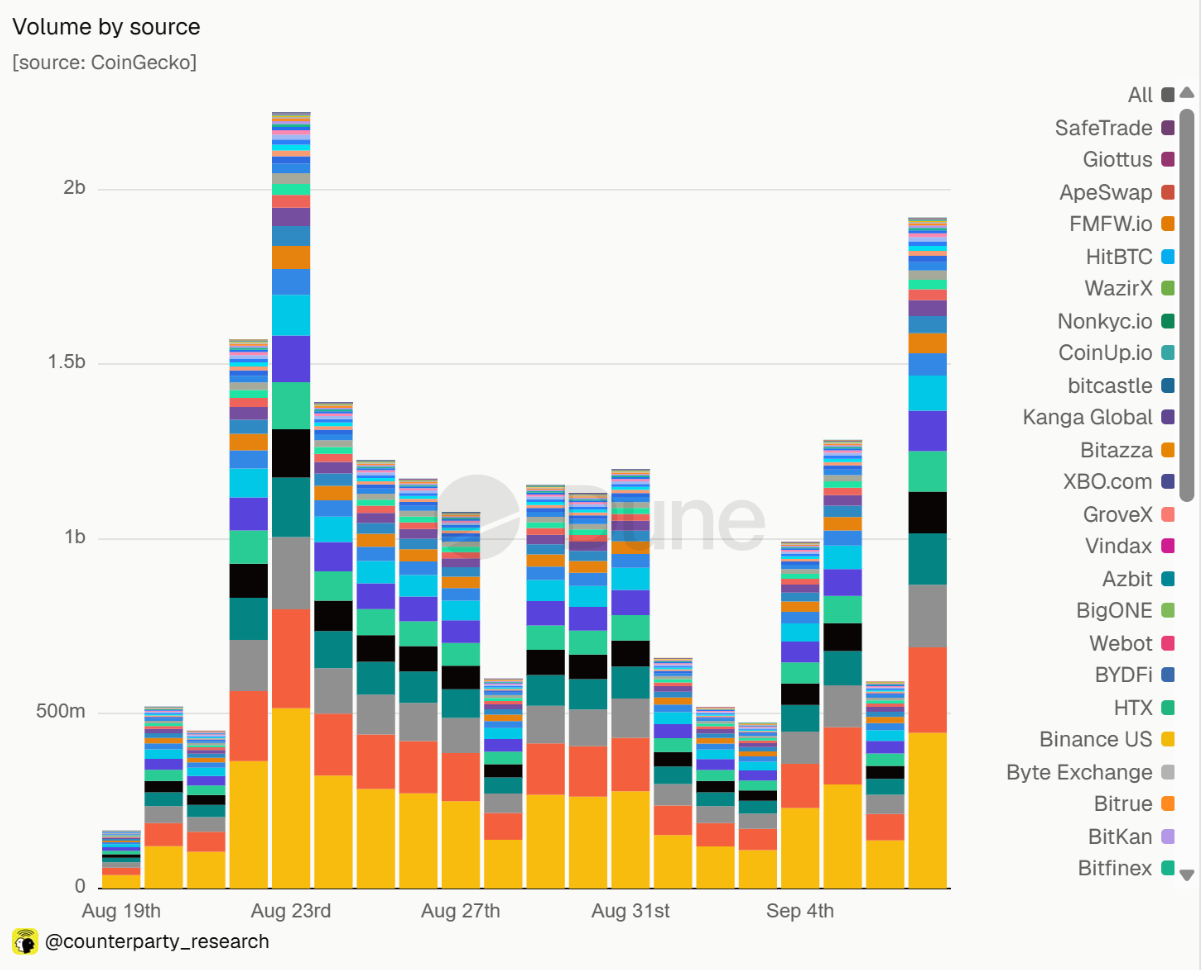
ZEC has seen several days with more than $1 billion in daily trading volume, and at times volumes have climbed above $2 billion. However most of that activity has taken place on centralized exchanges and before THORChain’s integration, Maya Protocol was one of the only venues where users could access ZEC in a full permissionless way.
How the Zcash Integration Works
Zcash is built around a Bitcoin-style UTXO architecture, which allowed THORChain to build on much of the infrastructure it already uses for chains such as Bitcoin, Litecoin, and Dogecoin. However, Zcash still has its own transaction rules, fee model, RPC behavior, and network upgrades that require dedicated support.
The integration includes:
- Zcash-specific UTXO support: THORChain recognizes ZEC as its own UTXO-based blockchain and includes the extra transaction handling Zcash requires.
- Dedicated ZEC RPC handling: Zcash behaves differently from other Bitcoin-style chains at the RPC level, so THORChain includes ZEC-specific logic for observing the network and managing transactions.
- UTXO transaction safety: THORChain includes safeguards to prevent ZEC transaction inputs from being reused while an outbound transaction is still being processed.
- Zcash fee handling: The integration supports Zcash’s ZIP-317 fee model instead of treating ZEC fees the same way as Bitcoin fees.
- ZEC oracle support: ZEC is included in THORChain’s enshrined oracle infrastructure, allowing the protocol to track its market price.
- Network upgrade support: THORChain’s Zcash client has been updated to support the NU6.3 Ironwood upgrade, including its new consensus branch.
Together, these components allow THORChain nodes to observe the Zcash network, track vault funds, construct and sign outbound transactions, and coordinate native ZEC swaps through THORChain's decentralized vault infrastructure.
What About Zcash Privacy?
Zcash supports both transparent and shielded transactions, but THORChain’s ZEC integration currently uses Zcash’s transparent UTXO infrastructure.
That means swapping ZEC through THORChain doesn’t provide the same privacy as sending funds between shielded Zcash addresses. The transactions remain publicly traceable, and THORChain activity such as swaps, fees, and vault movements can still be viewed through explorers and other onchain analytics tools.
In other words, THORChain gives ZEC native cross-chain interoperability without making the underlying swap activity private or inaccessible. Zcash’s shielded transactions remain a separate feature of the Zcash network.
Another Major Native Asset Comes to THORChain
Zcash has survived multiple crypto cycles while continuing to push forward one of the ideas that originally made cryptocurrency interesting: users should have more control over how their money moves.
THORChain extends that idea in a different direction. Instead of requiring ZEC holders to hand custody of their assets to a centralized exchange just to move between blockchains, THORChain gives them a native route into assets like BTC and ETH while keeping the swap decentralized and non-custodial.
No wrapped ZEC. No bridge. No centralized exchange account. Just native ZEC moving between blockchains through THORChain.
Swap your ZEC on swap.thorchain.org

Related articles
![boone.tools logo on a dark THORChain background, introducing Boone's collection of THORChain analytics dashboards.]()
Oct. 5, 2026
Introducing boone.tools: A Better Way to Understand THORChain
- Spotlight
- Guide
![THORChain's System Income distribution, with 20% now directed to Protocol-Owned Liquidity and the RUNE burn reduced to 1%.]()
Sep. 23, 2026
How THORChain’s New System Income Distribution Works
- Guide
![Illustration of THORChain's Protocol-Owned Liquidity system, showing System Income flowing into deeper liquidity pools.]()
Sep. 21, 2026
Why Protocol-Owned Liquidity Matters for THORChain
- Guide
![How to Swap Crypto on THORChain thumbnail, a THORChain guide]()
Sep. 18, 2026
How to Swap Crypto on THORChain
- Guide
![THORChain Thumbnail for the 2026 guide comparing ten decentralized exchanges across cross-chain support, fees and MEV protection.]()
Sep. 10, 2026
The 10 Best Decentralized Exchanges (DEXs) in 2026
- Guide
![Thumbnail for THORChain guide explaining how the Advanced Swap Queue and slip-based fees prevent sandwich attacks on swaps.]()
Sep. 7, 2026
How THORChain’s Swap Queue Prevents Sandwich Attacks
- Guide
![THORChain guide thumbnail explaining how to bond RUNE through direct whitelisting, RUNEBond and bRUNE liquid staking, with yield and risk comparisons for each method.]()
Sep. 2, 2026
How to Bond your Rune: a practical guide
- Guide
![THORChain guide thumbnail showing how to perform a cross-chain swap without connecting a wallet, using the Walletless Swap feature on swap.thorchain.org.]()
Aug. 12, 2026
How To: Walletless Swaps
- Guide
![THORChain is transparent even with privacy coins thumbnail.]()
Jul. 21, 2026
THORChain Is Transparent Even With Privacy Coins
- Guide
![THORChain Community Podcast #198 thumbnail featuring JP and Kenton demonstrating the first live decentralised RUNE to Monero swap on THORChain's chainnet.]()
May. 14, 2026
JP Demos Live Monero on THORChain: 7 Nodes, Real Funds, First Swap Works
- Podcast
- Guide
![]()
Apr. 22, 2026
How to read a transaction on THORChain?
- Guide
![]()
Apr. 16, 2026
THORChain’s Native API - plugging liquidity directly to wallets and DEXs
- Guide
![]()
Nov. 26, 2025
Memoless Transactions - THORChain Without Wallet Limitations
- Guide
![]()
Oct. 29, 2025
Advanced Swap Queue & Limit Swaps
- Guide
![]()
Oct. 2, 2025
THORChain Tokenomics (as of Oct 2025)
- Guide