Liquify Fixes THORChain’s Quote Slowdown & Kenton Reviews a Year of THORChain Marketing

— 15 min read
- Podcast
THORSday Community Podcast #250 ft. Andy, KentonC137 & Patriotsounds | November 12, 2026 | Watch the full episode on YouTube
By Raynalytics
TL;DR
- Liquify traced weeks of slow quotes to a v3.20 cleanup that made each quote's work grow quadratically with the swap queue. With $XRP halted, the queue hit about 3,000 and quotes took 75x the CPU they should. The fix is merged, running in Liquify's custom build and will ship in v3.22.
- THORChain Swap did about $1 billion of user volume from about 11,000 addresses in its first year. Ray's dashboard shows its swaps have generated about $2.3 million in liquidity fees, against about $850K spent on marketing and the build.
- Kenton laid out his marketing funnel, built from the bottom up: the front end is nearing maintenance mode and the website is live, and the work now is search and AI visibility, PR, newsletters and research platforms. Monero is the story he plans to sell, once the pool is deep enough.
- His chain strategy favors communities that want THORChain. After Monero, Dash is ahead of $TAO in the queue, with the goal of THORChain becoming the privacy-coin DEX.
- Kenton backs moving protocol-owned liquidity out of dead pools, including shifting about $400K of $XRP POL toward $XMR, but only once the Monero pool is battle-tested.
1. Liquify Explains the Quote Slowdown and the Fix
Chad took the day off to code, so Kenton brought on Andy from Liquify, which runs THORChain's public API and RPC infrastructure and operates Kenton's nodes. Integrators have been hitting API issues for months, with knock-on effects for THORChain Swap and wallet integrations, and Kenton asked Andy to walk through why.
Liquify took over from Nine Realms nearly nine months ago. It runs about 50 RPC nodes colocated worldwide, which answer queries, quote swaps and submit transactions but have no say in consensus. They handle about 100 million THORChain requests a day, and CoinGecko pulls its THORChain trade data through an API Liquify runs for it. Andy walked through the fixes so far:
- A single lock: a bug about three or four months ago put every API request behind one lock, so nothing got through during consensus and requests backed up whenever the chain slowed.
- Non-determinism: these issues could knock Liquify from about 50 nodes down to about 10. Liquify queued requests in smaller chunks, trading latency for fewer failures, which hurt partners like SwapKit that want quotes in under a second. The THORChain devs fixed the root cause.
- IAVL: an outdated version of the caching library had a race condition that could push a node out of agreement with the network. Liquify updated it and its pull request was merged quickly.
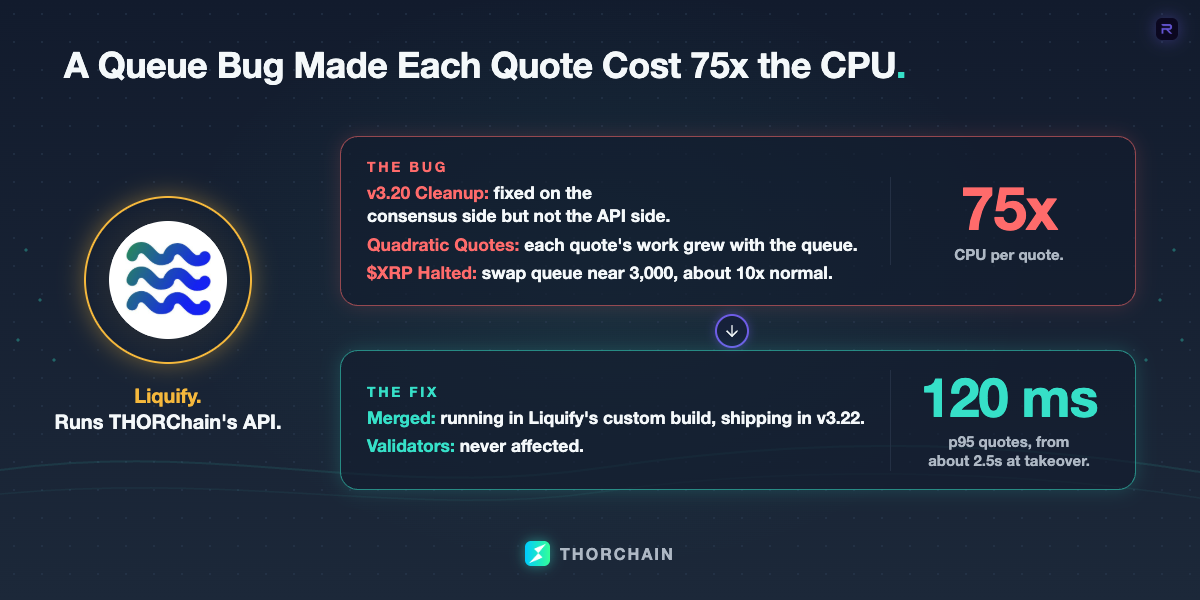
The latest issue came from a v3.20 cleanup written by Huginn, Chad's AI agent. Swaps dropped from the swap queue were not being removed from a matching index queue, so the list kept growing. The fix landed on the consensus side but not the API side, which made the work behind every quote grow quadratically with the queue. With $XRP halted, the swap queue sat at about 3,000, roughly 10x normal, and each quote took 75x the CPU it should. Liquify pushed a fix in the morning, but because of private v3.21 fixes Andy could not access, it had to wait for the THORChain devs to review it that afternoon. It is now merged, running in Liquify's custom build and will be part of v3.22.
Validators were never affected, only nodes serving heavy quote traffic, and Andy said Nine Realms would have hit exactly the same issue. Since Liquify took over, the 95th-percentile quote time for integrators has fallen from about 2 to 2.5 seconds to 120 milliseconds.
"We've actually got the best latency we've ever had with that fix." (Andy)
Asked whether AI-written code is causing more bugs, Andy said the change was not wrong, just a very hard-to-see edge case, and more changes simply mean more room for errors. He noted THORChain requires at least four reviewers and is talking with Chad about better regression testing.
Liquify serves about 2.5 billion calls a day across about 90 chains on hardware it owns. Its new product, Enclave, runs end-to-end encrypted AI inference inside trusted execution environments for regulated businesses, and is open for testing.
2. A Front End That Paid for Itself: $1 Billion in Year One
With Andy gone, Kenton used the rest of the show for the one-year marketing review he has been drafting as a written report, and said this recap could stand in for it.
He started with why THORChain needed its own interface. In 2025, after the THORFi fallout, interfaces that recommend the cheapest route kept ranking THORChain below Chainflip, Maya and eventually NEAR Intents. The community was telling friends to use THORChain, and the interfaces were sending them somewhere else. Kenton pitched an interface that only uses THORChain, JP agreed, and the Unstoppable Wallet developers built it. It went live at the end of September 2025, and volume took off after a major upgrade that November.
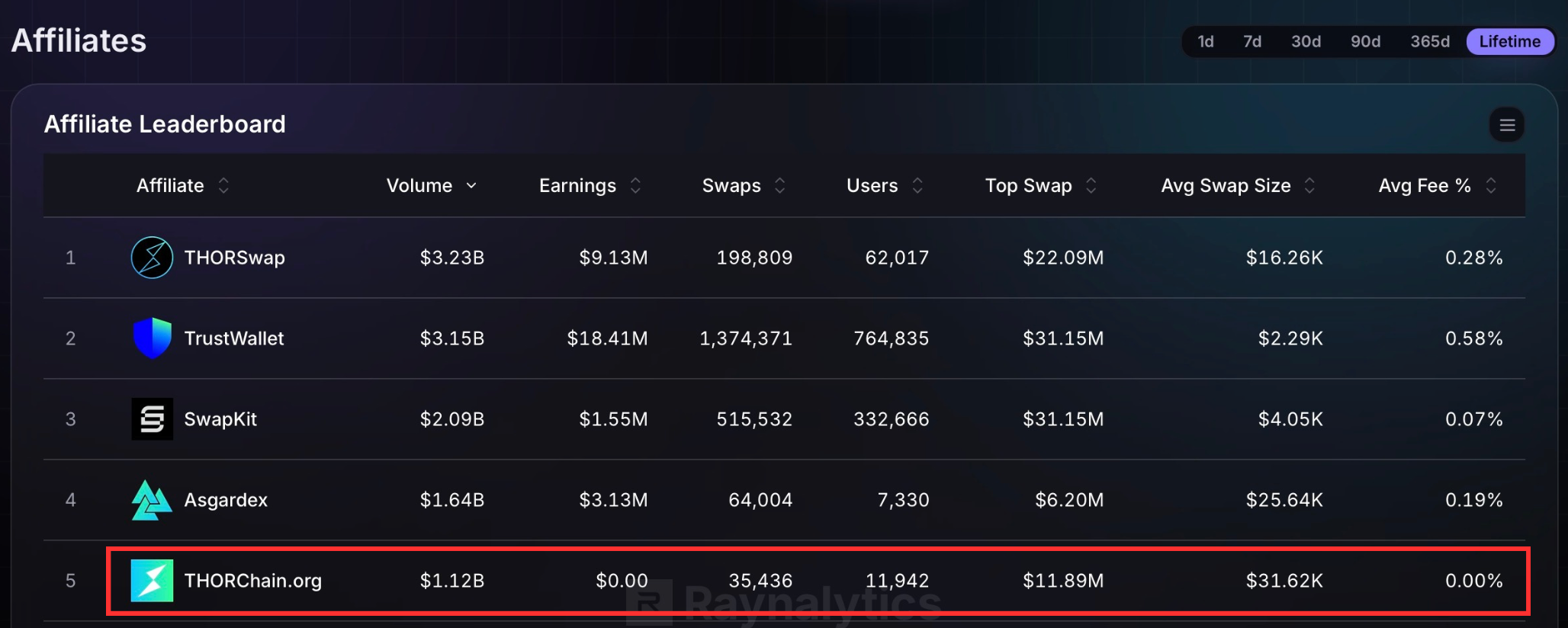
A year in, THORChain Swap has done about $1 billion of user volume from about 11,000 unique addresses. It ranks fifth by lifetime volume on Ray's Affiliates Leaderboard, and Kenton says it would rank first if every interface's volume were prorated to the same time span. Denny also shared Ray's THORChain Frontend dashboard, where swaps are spread fairly evenly across swap sizes.
Each $1 of user volume is $2 of THORChain volume, since it swaps in and out of $RUNE, and the THORChain Frontend dashboard shows the front end's swaps have generated about $2.3 million in liquidity fees. Kenton's own estimate runs higher: Boone and Devel estimate each $1 of swap volume on THORChain triggers about $1 of arbitrage volume, which by his math puts the total near $4 million, counting arbitrage that the dashboard does not attribute to the front end. On the cost side, the marketing fund has spent about $600K and the Treasury about $250K building the front end. Its monthly costs are now covered by the fee on its Houdini private swaps and sends, which has already earned about $45K.
"If we didn't tell anybody this exists and we're quiet about it, no one would use it." (Kenton)
He was honest that no one can prove how much of the volume the marketing drove. His upside case is simple: Coinbase and Binance have about 300 million accounts between them, and 1% of that is 3 million people, close to 300x the front end's current addresses.
Next up, Randy meets Onramper in London about a fiat on- and off-ramp that would earn a fee, as Houdini does, and Kenton is working with Erudite on a DeFi tab linking to Rujira. Any surplus goes back into growth, including paying wallets for $RUNE support as a way in to direct integrations with a revenue share, with Ledger and Trezor as obvious targets. He asked users to send feedback through the support chat widget, which the mods read and forward to him.
3. Building the Marketing Funnel From the Bottom Up
Kenton's core argument is that THORChain was never invisible infrastructure. Wallets and interfaces make users pick a venue, so the brand decides whether a user or a wallet chooses THORChain. When the community pushed for a new name and logo, he argued for cleaning up the brand first: combining scattered channels and Medium accounts into one blog, getting every stakeholder moving in one direction, and keeping years of Norse-themed memes and code names.
"Imagine you got a house that's really dirty. Like, oh, I got to move and buy a new house. Like, dude, just clean your house." (Kenton)
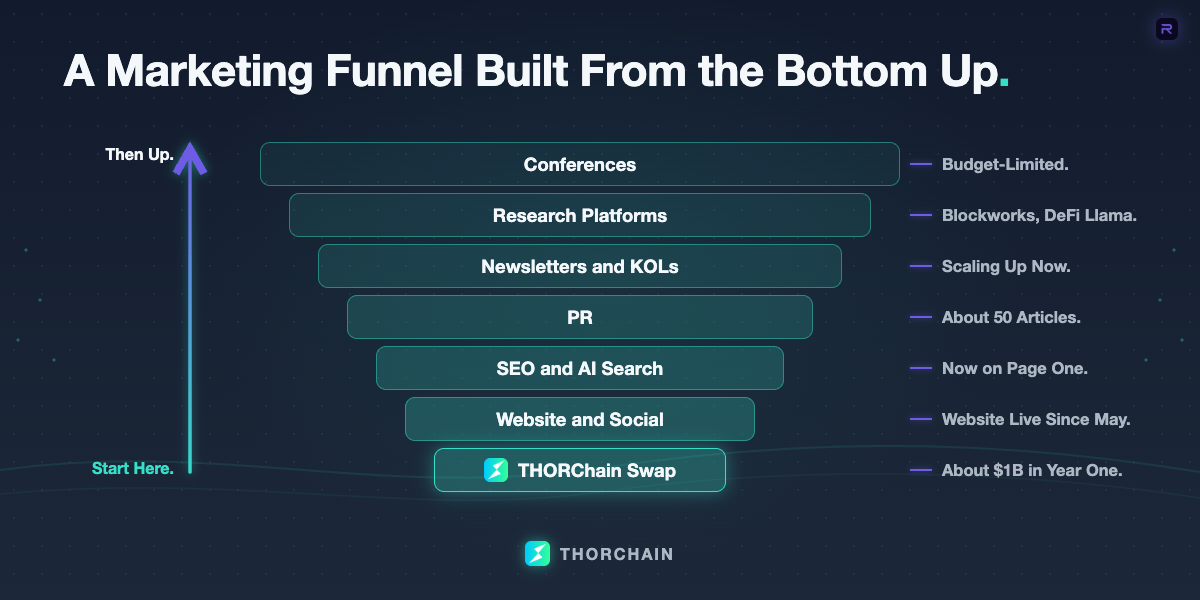
The plan is a funnel, built from the bottom up so new users do not fall out of a hole on the way down. THORChain Swap is the base. The new homepage came next and went live in May, the same week as the exploit. An early hire to run marketing did not work out and put the website about two months behind, so Kenton now runs it full-time, with Scorch part-time. Social media sits above that, aimed at new people rather than technical updates, which belong in Discord and Telegram.
Search is where Kenton sees the best return, because someone searching how to swap Bitcoin is ready to act. THORChain used to show up on page three of search results, and he says it now shows up on page one for generic swap terms. Landing pages for individual pairs, such as $BTC to $ETH and $BTC to $XMR, are next. On AI search, Kenton's Q3 marketing update noted the sites were failing AI-readiness audits in Q2, and the MCP libraries and robots.txt files agents look for are now in place. The next step is merging docs.thorchain.org and dev.thorchain.org into one site that agents can read. Kenton credited Sam Yap and GrassRoots, who maintain the docs, saying partners rate them highly.
After a first attempt was rejected, he has been talking with one of the agencies approved for ChatGPT ads about getting THORChain to show up for swap searches, since Google Ads are off the table without a license. Agents can already use THORChain directly, and Kenton said making the protocol itself more agent-friendly is on the devs' minds.
4. PR, Newsletters and the Plan for Monero's Official Launch
PR is about diluting negative headlines with positive ones. Cheap $500 articles land on low-authority sites that do not rank, and sponsored tags hurt search ranking, so the goal is voluntary coverage on high-authority outlets. That is what MarketAcross provides through its journalist relationships. Kenton said it averages about $1,100 per article or press release, about what he would pay going direct, and about 50 have gone out so far. A v3.20 press release alone sent traffic to the front end.
"The solution to pollution is dilution." (Kenton)
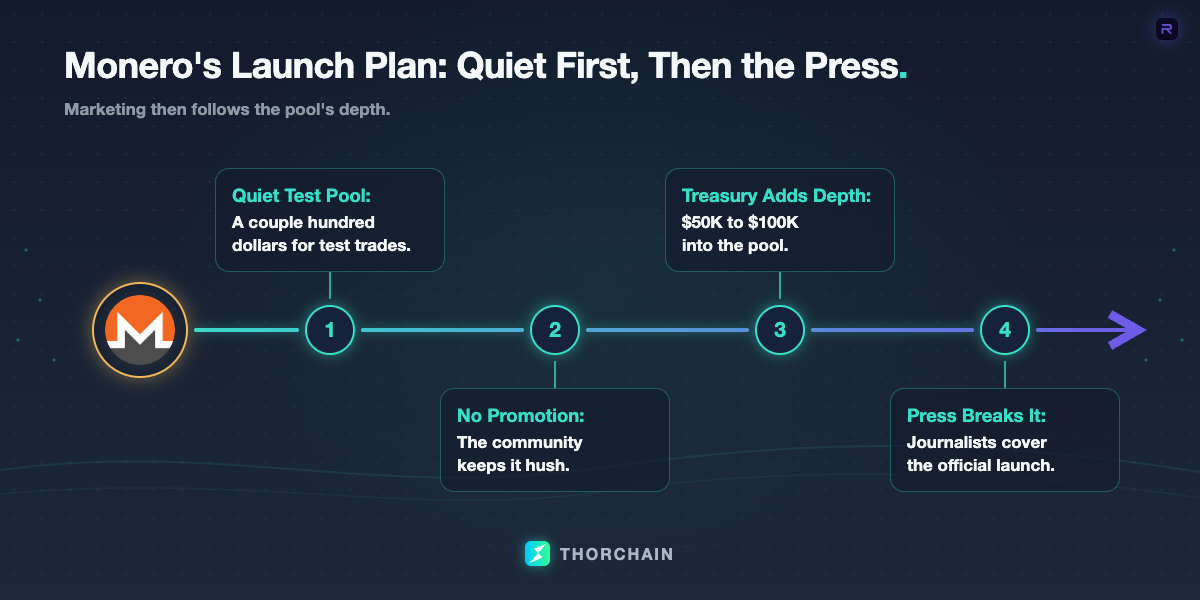
The agency also shaped the Monero plan, first discussed in the Podcast #248 recap. Big outlets need to break the news themselves, so the pool would go live quietly with a couple hundred dollars for test trades, and Kenton asked the community to keep it hush. Once the Treasury adds $50K to $100K, journalists get the story as the official launch. Because "Monero is always two weeks away," he will not hold other campaigns for it, and he wants the marketing to follow the pool's depth so new users do not arrive to heavy slippage.
Newsletters are his favorite channel because they reach high-intent readers. THORChain is in DeFi Llama's monthly newsletter under a year-long deal. He is focusing on Bitcoiners: Bitcoin Magazine wants THORChain as its preferred DEX partner in a paid advertising deal, which Kenton is discussing with them, and Denny noted that Mark Mason was a fan when he met him with Joel. Sal the Agorist is signed for a year-long campaign, with his commercials waiting on a sign for his show and on memoless swaps returning for a how-to segment.
KOLs are next, starting with a large one targeting Russian-speaking audiences in the CIS region that is preparing a proposal. They also raise a harder question. One told Kenton that 10% of fees was laughable and exchanges pay 30% to 40%. Because THORChain has no accounts, a referral link anyone can use would let every user trade at a discount through their own link and cut fees across the board. For now, he will offer links only to strategic partners and will bring the rate to the nodes if it comes to that.
5. Research Platforms, an S&P Index and Conferences
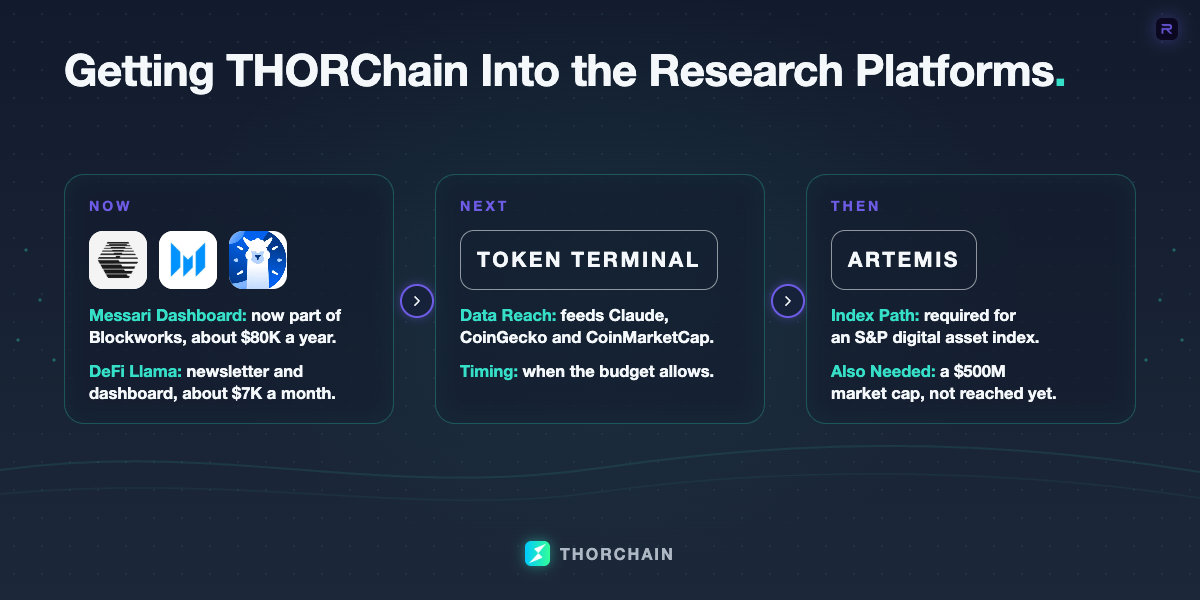
Research platforms sit higher in the funnel, because they mostly attract investors in $RUNE rather than swappers. Kenton agreed that volume growth has to come first. The Messari dashboard, now part of Blockworks after Blockworks acquired Messari, costs about $80K a year. It was budgeted when the marketing fund made about $100K a month, and the fund now brings in about $50K. He plans to keep it and lean on Blockworks for its newsletters and conferences.
The DeFi Llama deal pairs the newsletter with an accurate dashboard, at about $7K a month for both, so readers who check THORChain's data are not turned away. Next on his list is Token Terminal, which has a relationship with Anthropic to get its data into Claude and feeds CoinGecko and CoinMarketCap. After that comes Artemis, because being on Artemis is one of the requirements for an S&P digital asset index of revenue-earning protocols, along with a $500 million market cap that THORChain has not reached yet.
Conferences are at the top of the funnel and the bottom of his budget. The Treasury is paying for Chad and Randy to attend Breakpoint in London, but booths cost $20K to $30K. Instead, he liked a Lemur Labs idea: THORChads walking the floor in matching swag, which Kenton offered to pay for.
6. Monero, Dash Ahead of $TAO and Chains That Want THORChain
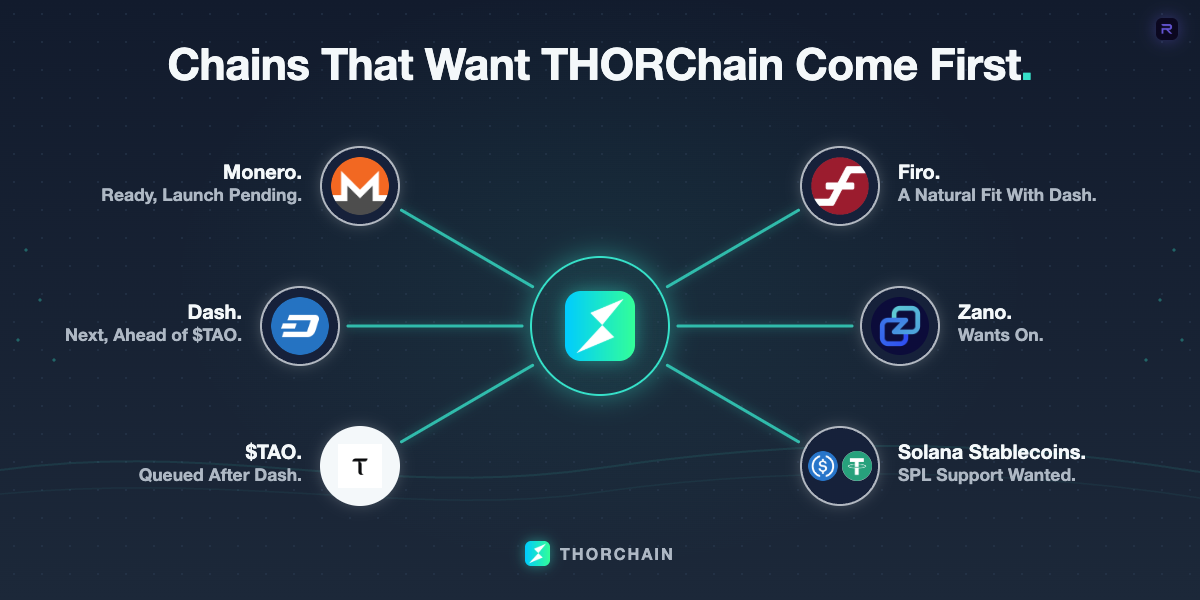
Denny thinks THORChain will be known as the $XMR DEX, and Kenton has had Monero in the site's search description for months. The support chat gets asked almost daily when Monero goes live, and when the CIS-focused KOL asked what is truly unique about THORChain, Kenton's answer was Monero.
The wider goal is a privacy-coin DEX. Dash is ahead of Bittensor's $TAO in the queue, according to StarSquid, with Firo a natural fit alongside Dash. Zano wants on, and Denny said Zano has recovered well from its rollback. Kenton thought Pirate Chain had fallen through, but Denny said Pirate Chain's Daniel remains a big supporter. Some nodes want a stability break after Monero before adding more chains.
Kenton's rule for prioritizing is to back chains whose communities want THORChain. Those projects provide liquidity by buying $RUNE to pair with their token and promote THORChain to their own audiences for free. The costs are developer time and the daemon every node has to run, which Chad's opt-in chain clients could ease. He called not adding Dash earlier a blunder.
"We're going to have way better volume with the communities of the blockchains that want to be on THORChain versus the blockchains that don't care about THORChain." (Kenton)
After that, he would like TON, whose token is now called $GRAM, so Randy can pitch Telegram Wallet, and possibly SPL token support first for $USDC and $USDT on Solana. Beyond those, Hyperliquid and NEAR are the two biggest names he sees missing from the top 100.
Listing privacy coins does not make THORChain itself private, though. Denny noted that every swap is recorded on chain, including Monero destination addresses, and the hosts pointed out that the solvency checker depends on that transparency. Andy added that going private would need a much larger validator set and would bring regulatory risk.
7. Moving POL Out of Dead Pools, With Monero in Mind
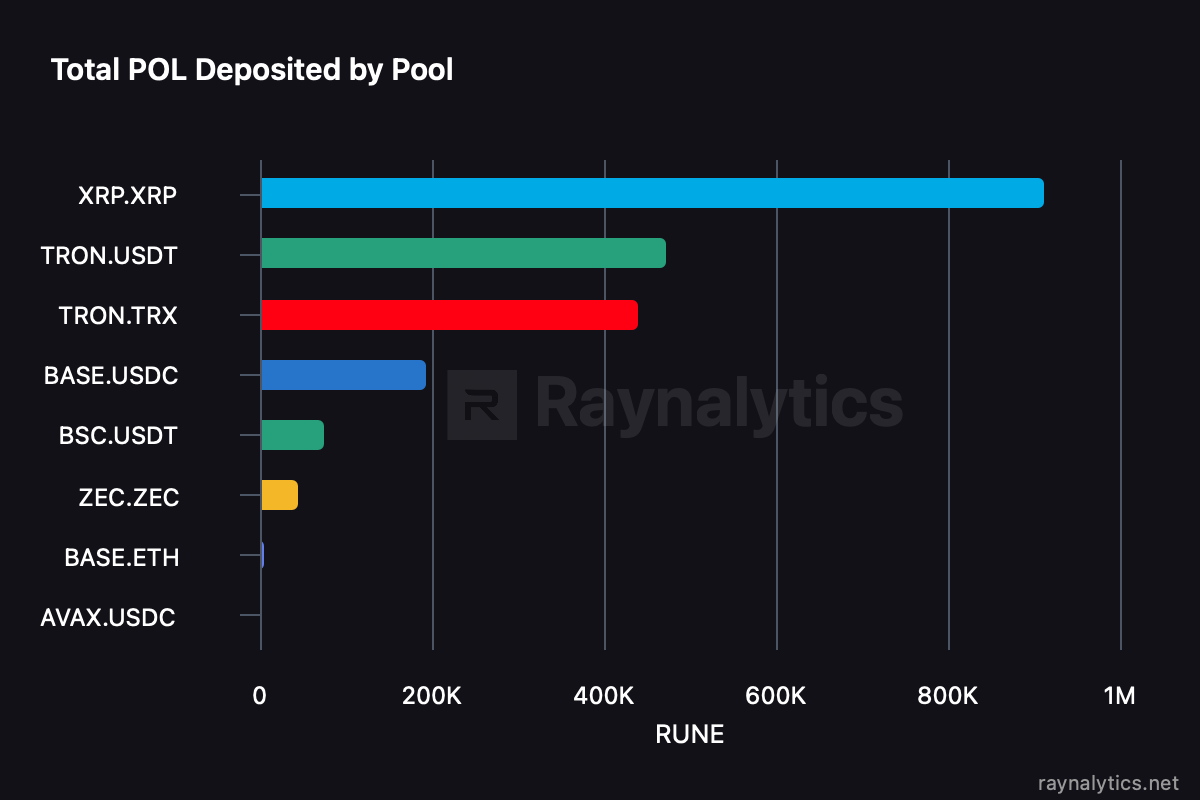
An audience member asked whether THORChain should move its $XRP protocol-owned liquidity, about $400K, into $XMR. Kenton supports one-off moves like that, though not constant automatic rebalancing because of impermanent loss, and would wait until the Monero pool is battle-tested. Denny expects POL to flow into $XMR quickly anyway, since it goes to the pools with the best revenue relative to depth. Kenton said it could still make sense to move the $XRP liquidity on top of that, to bring the pool toward $1 million.
Boone wrote up a related idea in the spring. The Treasury has about $12 million locked in pools, and Kenton estimates about $2 million of it sits in dead pools with very low fees relative to depth. Shuffling that into stronger pools, such as the now-staged $LINK pool, could put it to better use.
POL has grown to about 2.2% or more of total pool depth in roughly three months, and the hosts framed it as turning liabilities into revenue-generating assets. The hosts credited FamiliarCow with suggesting about a year earlier that protocol revenue go into the pools instead of the burn. FamiliarCow has also floated a separate LP unit so POL could return to $BTC and $ETH without mixing with synth-leveraged units, though the hosts thought that adds too much complexity for now. Maya Protocol is set to add POL too.
What to Watch
- v3.22 shipping the quote fix that Liquify is already running in its custom build.
- The $XMR test pool going live quietly, then the Treasury liquidity that would trigger the official launch coverage.
- Randy's Onramper meeting, and Andy, Chad and Randy's Monday meal in London, open to anyone who wants to join.
- New newsletter, KOL and ChatGPT ad campaigns, and whether KOL referral rates go to the nodes.
- Whether Dash comes after Monero, and any proposal to move $XRP POL into $XMR.
- Nym as an upcoming Saturday guest.

More THORChain data, check out raynalytics.net
Follow Raynalytics for more Weekly Analytics and Podcast recaps.

Related articles
![Ecosystem Update Podcast with Aaluxx]()
Nov. 7, 2026
Aaluxx on How $MAYA Inspired $TCY, $CACAO’s Fair Launch and Maya’s Aztec Intents
- Podcast
![Protocol Update Podcast with Chad Barraford, Kenton and Denny]()
Nov. 5, 2026
Monero Is Ready on THORChain, Bond Yield and SwapKit Rev-Share
- Podcast
![Ecosystem Update Podcast with Moca]()
Oct. 31, 2026
Moca Nears Launch & How It Uses THORChain to Bring Crypto Payments to the Register
- Podcast
![Protocol Update Podcast with CodeHans, Pragmatic Monkey, Boone, Chad Barraford, Kenton and Denny]()
Oct. 29, 2026
Inside Rujira’s Kaiyo Debate: Can a Rujira Chain Stay Aligned With THORChain?
- Podcast
![Ecosystem Update Podcast with Zodl]()
Oct. 23, 2026
Zodl and THORChain: Shielded Zcash, Zodl Vault and the Case for Redundant Swap Routes
- Podcast
![Protocol Update Podcast with Chad Barraford, Kenton and Denny]()
Oct. 22, 2026
Monero on THORChain Waits on v3.21.1, SwapKit Rev-Share and 2-Second Blocktime
- Podcast
![Protocol Update Podcast with Chad Barraford, Kenton and Denny]()
Oct. 15, 2026
SwapKit Rev-Share Week One: Early Data Looks Promising, v3.21 and Monero Next
- Podcast
![Ecosystem Update Podcast with Zano]()
Oct. 10, 2026
Zano’s Recovery Plan and the Road to THORChain
- Podcast
![Protocol Update Podcast with Chad Barraford, Kenton and Patriot]()
Oct. 8, 2026
Chad's Unchained Podcast Debrief, Rev-Share and Monero
- Podcast
![Ecosystem Update Podcast with Houdini Swap]()
Oct. 3, 2026
Houdini Swap on THORChain Explained: What It Means for Users and Treasury Revenue
- Podcast
![Protocol Update Podcast with Chad Barraford, Kenton and Denny]()
Oct. 1, 2026
Can or Should THORChain Censor Transactions?
- Podcast
![Protocol Update Podcast with Chad Barraford, Kenton, Devel and Boone]()
Sep. 24, 2026
Inside the Houdini Swap Debate: THORChain’s Treasury, Privacy and Revenue
- Podcast
![Ecosystem Update Podcast with Radix]()
Sep. 19, 2026
Radix and THORChain: Building Trust for the Agentic Future
- Podcast
![THORChain Podcast protocol update cover]()
Sep. 17, 2026
THORChain Returns to Shipping: Zcash, Monero and Self-Sufficiency
- Podcast
![Ecosystem Update Podcast with Station Wallet]()
Sep. 13, 2026
Terra’s Station Wallet Is Back as Vultisig’s Agentic THORChain Wallet
- Podcast